Scott Douglas Jacobsen: What’s the scariest thing you’ve ever watched? In person? On television? Let’s start with something from fiction and then something from real life.
Rick Rosner: We’ll do fiction first. JD and I were driving back from a Lance show one night just as a wildfire started along the 405. We drove through it about three minutes after it began, and you could tell it had already consumed half of a hillside in five—or maybe ten—minutes. It was still fresh and raging. As we drove through, the temperature inside the car increased by about 5 to 8 degrees. You could feel the heat—it was scary, though not immediately dangerous.
Then there was the ’94 earthquake. Carole and I were on the top floor of a three-story, wood-frame condo building that swayed considerably. The earthquake lasted more than 15 seconds—the biggest I’ve experienced. That was pretty terrifying. How about you?
JacobsenI experienced something similar during the war. While travelling in Ukraine, we passed by a fire—being put out—a forest fire. We were heading up near what I believe was Sumy Oblast, travelling between Sumy and Kharkiv.
Rosner: Speaking of Ukraine, what do you think about the current state of the war?
Jacobsen: Ukraine is making some inroads into Russian territory, but that’s not many square miles compared to what Russia holds in Ukraine. The Ukrainians will not end up like the Kurds. A few major players are supporting Ukraine and pushing back against Russian aggression. The human rights case for Ukraine is clear, but the political case is less so. Casualty figures and costs are stacking up against the Russians. Still, Ukraine has a population of about 40 million compared to Russia’s 160 million, so Russia can theoretically absorb more losses. It’s a tricky situation. Also, Russia has broken new ground by deploying North Korean boots on the ground. Does this mean NATO can put boots on the ground, too? And what do you make of Trump’s statements about Greenland, the Panama Canal, Canada, and Mexico?
Rosner: All of that is ridiculous. He wants to rename the Gulf of Mexico—the northern border of Texas, Louisiana, Alabama, Mississippi, and Florida—even though it’s been called the Gulf of Mexico for over a century. It’s just stupid. And no, Denmark hasn’t sold Greenland to us, and Canada will remain sovereign. As for Greenland, Canada, and even Alaska, that’s a different discussion.
Now, shifting gears a bit—one of the main resources required by AI is energy, which is used for computation. It takes a tremendous amount of energy.
Jacobsen: I interviewed a major AI expert—he trained under Geoffrey Hinton. He has 200,000 citations. One thing that came out of that conversation is that they use a different term: “compute” and energy. They’re concerned with questions like, “How much energy will it cost? How much data do you need? How many computers do you have?” These are the kinds of questions that are shaping the future of AI. So, what do you think?
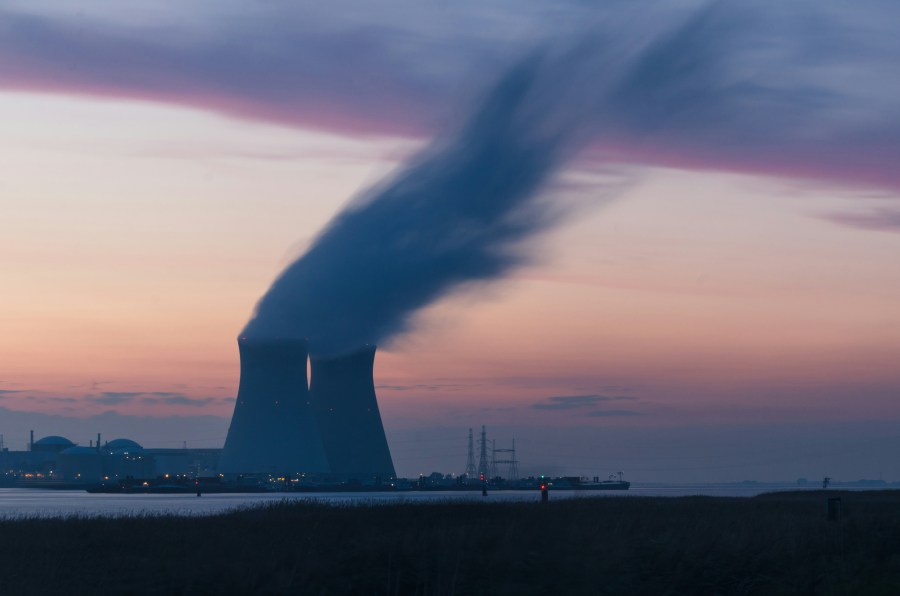
Rosner: So, it’s a whole new economy. The idea is that nuclear power is the easiest way to generate the energy needed for AI—at least, that’s what I and many others believe—. The advantage is that you can locate your massive server farms and nuclear reactors far from populated areas. Well, kind of.
Suppose you’re going to deploy several nuclear reactors. In that case, you’ll be pleased to know that modern reactors are safer than they used to be, thanks to improved technology. Some of the biggest meltdowns—like those at Three Mile Island and Chornobyl—weren’t caused by faulty reactor designs or unavoidable natural disasters but by human error.
If you plan to install many nuclear reactors, consider this: Canada has 22 reactors, and the U.S. has 93. For countries of our size, that isn’t very many. However, Canada boasts vast expanses of wilderness—just as Greenland and Alaska do. Placing reactors in these remote, largely uninhabited areas means that if something goes wrong, the risk of large-scale human casualties or environmental contamination is minimized. Of course, these “wilderness” areas are rich ecosystems, not barren wastelands.
In a discussion I had this morning on PodTV, someone mentioned that fusion power might soon be viable. I remain cautiously optimistic about that possibility. Fusion, if it works as hoped, could provide significant energy without the issues of nuclear waste and meltdown that come with fission reactors. Traditional fission reactors leave behind much radioactive waste—primarily uranium and sometimes plutonium—and they carry a risk of meltdown. On the other hand, fusion reactors would produce helium (or use deuterium). They wouldn’t pose the same meltdown risk because they don’t generate long-lived radioactive waste.
But even if we manage to produce all this energy safely, there’s another issue: the enormous amount of waste heat generated by computation—what experts call “compute.” The heat produced by our relentless information processing might become a significant problem in about a hundred years. The heat released by human activities isn’t a major driver of climate change; greenhouse gases like CO₂ trap more sunlight and warm the planet. Burning fossil fuels produces greenhouse gases that capture the spectrum of sunlight that would otherwise escape, much like a microwave heats food.
Eventually, as we do more computation and use more energy, we have to deal with waste heat on a massive scale. Our human population may decrease, reducing the per capita carbon footprint. Still, sooner or later, we’ll have to figure out how to dissipate all that heat. Future ideas include moving energy production into orbit—imagine a fleet of orbiting fusion reactors. That way, the energy sources would be isolated from populated areas and less likely to be weaponized or misused. Alternatively, we could even consider placing energy production facilities on the Moon, where heating the surface might not be as problematic. However, moving to compute far from energy sources introduces latency issues. For example, if computing facilities are near nuclear power sources in the Arctic, you might experience a delay of the tenth to two-tenths of a second in routing your computations. Relocating compute to the Moon would introduce a three-second lag—a deal-breaker for critical applications like AI-driven vehicles requiring near-zero latency. After all, the AI systems capable of driving cars are still too large to fit easily into vehicles.
Well, what do you think about all that?
Jacobsen: It seems efficient: if you have something that needs massive computation—say, for a research institute—you set up a nuclear reactor alongside your GPU supercomputer, essentially tapping into virtually infinite power. The new reactor designs, especially the salt-based ones, are remarkably safe. They’re engineered to shut themselves down and cool automatically in an emergency without human intervention. Unlike water-cooled reactors, which always involve a race against time to get water flowing back in (as we saw with Fukushima in an older reactor design), salt-based reactors use molten salt that can both serve as fuel and a coolant. In an emergency, they shut themselves down, minimizing risk.
Photo by Frédéric Paulussen on Unsplash
Rick Rosner is an accomplished television writer with credits on shows like Jimmy Kimmel Live!, Crank Yankers, and The Man Show. Over his career, he has earned multiple Writers Guild Award nominations—winning one—and an Emmy nomination. Rosner holds a broad academic background, graduating with the equivalent of eight majors. Based in Los Angeles, he continues to write and develop ideas while spending time with his wife, daughter, and two dogs.
Scott Douglas Jacobsen is the publisher of In-Sight Publishing (ISBN: 978-1-0692343) and Editor-in-Chief of In-Sight: Interviews (ISSN: 2369-6885). He writes for The Good Men Project, The Humanist, International Policy Digest (ISSN: 2332-9416), Basic Income Earth Network (UK Registered Charity 1177066), A Free Inquiry, and other media. He is a member in good standing of numerous media organizations.
License & Copyright
In-Sight Publishing by Scott Douglas Jacobsen is licensed under a Creative Commons Attribution-NonCommercial-NoDerivatives 4.0 International License. ©Scott Douglas Jacobsen and In-Sight Publishing 2012-Present. Unauthorized use or duplication of material without express permission from Scott Douglas Jacobsen strictly prohibited, excerpts and links must use full credit to Scott Douglas Jacobsen and In-Sight Publishing with direction to the original content.
 Rick Rosner