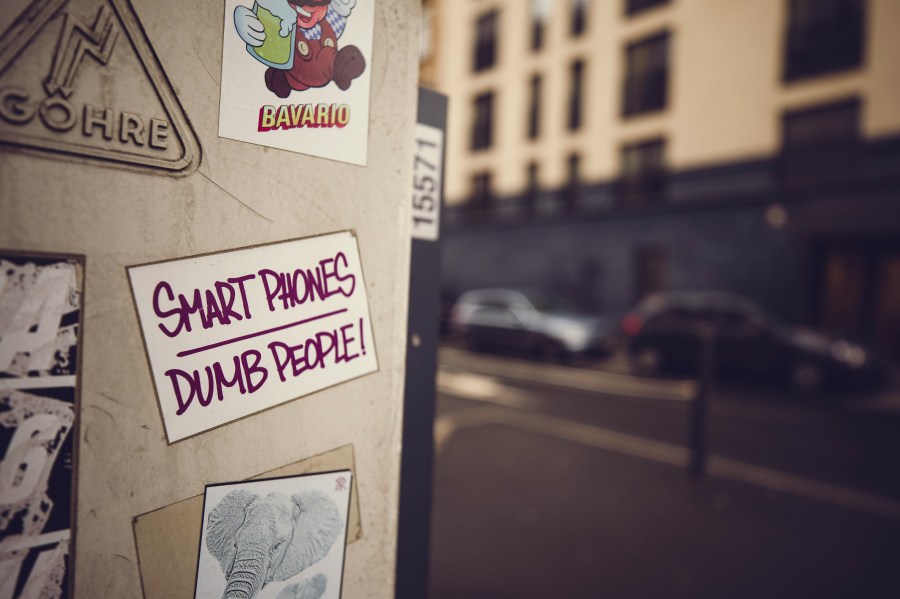
Rick Rosner: I sent you an article on the idea of “smart stupids” or “stupid smarts”—basically people, like tech billionaires, who are highly intelligent or skilled in one domain, like engineering, but display ignorance in areas outside their expertise without realizing it.
For example, on X (formerly Twitter), you will often see users with verified credentials—nurses, doctors, engineers, lawyers, accountants—espousing conspiracy theories or extremist views, including pro-MAGA rhetoric. I do not believe they are all lying about their credentials.
The essay I shared argued that people who are accomplished in one domain can fall into cognitive traps. They often overestimate their competence in unrelated fields. Tech entrepreneurs, for example, when speculating about the future or trying to optimize for longevity, can wander into bizarre territory by stacking speculative assumptions.
That point struck me because some of the most difficult high-IQ test problems also involve stacked assumptions. You often need to follow a chain of five abstract steps to reach the solution. But in real life, every abstract step is another opportunity to fall into error or delusion—which might explain what we are seeing with some of these highly credentialed professionals falling for misinformation or pseudoscience.
We’ve been talking about AI—predicting its trajectory, debating what we should do with it—and a lot of that falls into the “smart stupid” category. You have engineers, coders, and tech entrepreneurs trying to shape the future, but they may not actually be qualified to do that. Elon Musk is often cited as a prime example of a “smart stupid” figure.
But it is not just Musk. You could say the same, to varying degrees, about Jeff Bezos, Mark Zuckerberg, maybe even Bill Gates. Gates, despite being a favorite villain of the far right due to his progressive philanthropy, was known for being extremely difficult in his earlier career.
Scott Douglas Jacobsen: He was not always a nice person.
Rosner: No. He was downright mean to my former boss, Jimmy. Gates’ employees hired Jimmy to perform a roast at his birthday party, and Gates did not appreciate it. He was cold and dismissive. That said, Gates has done significant charitable work in recent years. He is not out there pushing conspiracy theories.
Jacobsen: His personal life might be somewhat complicated—he is either remarried or dating—but it is nothing compared to Musk’s erratic behavior. Gates seems to emulate Warren Buffett, or at least projects a similar grounded image.
Rosner: The essay made a compelling point: there are highly intelligent people who can still be profoundly misguided. It validated what I have suspected for a long time—many smart people are also, in key ways, fools.
Take the Trump presidency. It has been a disaster. The most recent developments are particularly catastrophic. He has effectively undermined the U.S. economy and severely damaged what global trust remained in American leadership. His actions have already sparked inflation and instability in international markets.
Even if he reverses his tariffs—which are ineffective anyway—they will not achieve his stated goal of bringing back manufacturing jobs. Prices on imported goods have risen so much that, in theory, domestic production becomes more viable. But as the economy tips into recession, far more people will lose jobs than gain new ones in manufacturing.
Anyone paying attention, who is not completely deluded, can see that this is a disaster—arguably the biggest unforced error by any president in modern U.S. history. The only comparable example is the 2003 invasion of Iraq, a catastrophe built on false pretenses. The first Gulf War in 1991 lasted four days and achieved its limited objectives. The second was a prolonged failure.
Photo by Markus Spiske on Unsplash
Rick Rosner is an accomplished television writer with credits on shows like Jimmy Kimmel Live!, Crank Yankers, and The Man Show. Over his career, he has earned multiple Writers Guild Award nominations—winning one—and an Emmy nomination. Rosner holds a broad academic background, graduating with the equivalent of eight majors. Based in Los Angeles, he continues to write and develop ideas while spending time with his wife, daughter, and two dogs.
Scott Douglas Jacobsen is the publisher of In-Sight Publishing (ISBN: 978-1-0692343) and Editor-in-Chief of In-Sight: Interviews (ISSN: 2369-6885). He writes for The Good Men Project; International Policy Digest (ISSN: 2332–9416); The Humanist (Print: ISSN 0018-7399; Online: ISSN 2163-3576); Basic Income Earth Network (UK Registered Charity 1177066); A Further Inquiry, and other media. He is a member in good standing of numerous media organizations.
License & Copyright
In-Sight Publishing by Scott Douglas Jacobsen is licensed under a Creative Commons Attribution-NonCommercial-NoDerivatives 4.0 International License. ©Scott Douglas Jacobsen and In-Sight Publishing 2012-Present. Unauthorized use or duplication of material without express permission from Scott Douglas Jacobsen strictly prohibited, excerpts and links must use full credit to Scott Douglas Jacobsen and In-Sight Publishing with direction to the original content.
 Rick Rosner