Scott Douglas Jacobsen: Given the contemporary challenges to democratic systems—including widespread disinformation, growing political polarization, and the strategic disenfranchisement of various demographics—do you foresee any future scenarios in which societies, perhaps under the guise of protecting democratic integrity, might implement a higher minimum voting age? Could such a shift be rationalized within a technocratic or hybrid democratic model where political participation is tiered or conditional upon demonstrated civic engagement or knowledge? In light of historical exclusions based on race, class, or perceived intelligence, would this kind of change represent a regression into elitism, or could it be defended as an adaptive response to the risks posed by uninformed or manipulated electorates—especially in an age where AI-generated propaganda and algorithmic echo chambers increasingly distort political agency?
Rick Rosner: In the U.S., lowering the voting age from 21 to 18 was considered a major step forward—partly influenced by the Vietnam War draft. That move probably could not happen today. Republicans would likely resist because younger voters tend to lean Democratic.
As for raising the voting age—I doubt it. Why would people vote to restrict their own rights? But it is a persistent issue. Historically, American democracy began with a narrow electorate: only a small number of white male landowners could vote in early elections, including for the presidency.
When you look at how many people voted for George Washington, it was only a few tens of thousands. The scope of voting has expanded gradually since then and, ideally, voting should be mandatory, as it is in Australia. But that will never happen in the U.S., because if voting were mandatory, Republicans would struggle to win. The majority of Americans do not support Republican policies, but a significant portion of eligible voters—more than a third—do not participate in elections.
Typically, about 30% of voting-age Americans vote Democratic, 30% vote Republican, and 40% do not vote at all. A recurring debate is whether uninformed people should be allowed to vote.
JBut that argument has historically been used to justify disenfranchising marginalized groups—especially Black Americans. For example, in the Jim Crow South, so-called “poll tests” were used to block Black people from voting. These tests were intentionally difficult or impossible to pass and were applied selectively. If someone objected, law enforcement—often the local sheriff—would show up to enforce the discriminatory rules, sometimes with the threat of violence.
That kind of logic is resurfacing. There’s a sense that the U.S. is in crisis. Whether it’s a disaster or a full-blown collapse, we do not know yet. We’re speaking on a Sunday night after two straight days of stock market drops, each around 5%, caused by Trump’s newly announced tariffs. Markets are expected to fall another 5% tomorrow.
Reports indicate that Trump’s team miscalculated the tariffs. The retaliatory measures they put in place were four times higher than they should have been, based on standard economic modeling. Trump has reportedly said he does not care—he wants Europe to pay for what he claims are years of economic imbalance. That’s a hostile posture toward Europe, which is a major global economic power.
There’s even a strange connection here. Some suspect that models used to justify the tariff math were influenced by tools like ChatGPT. When you ask ChatGPT to calculate tariff impacts naively, it can output equations resembling the faulty ones Trump’s team used.
And yet a significant number of people voted for Trump, despite overwhelming evidence he would harm the country. That leads to a fundamental question: how do we address widespread voter ignorance, especially when it’s deliberately manipulated? Republicans, in particular, have mastered the art of convincing people to vote against their own interests through propaganda.
At this point, there’s no clear or democratic way to prevent uninformed voters from casting ballots. What needs to happen is that people who actually represent the public interest must learn how to counteract that propaganda—how to communicate more effectively, honestly, and powerfully.
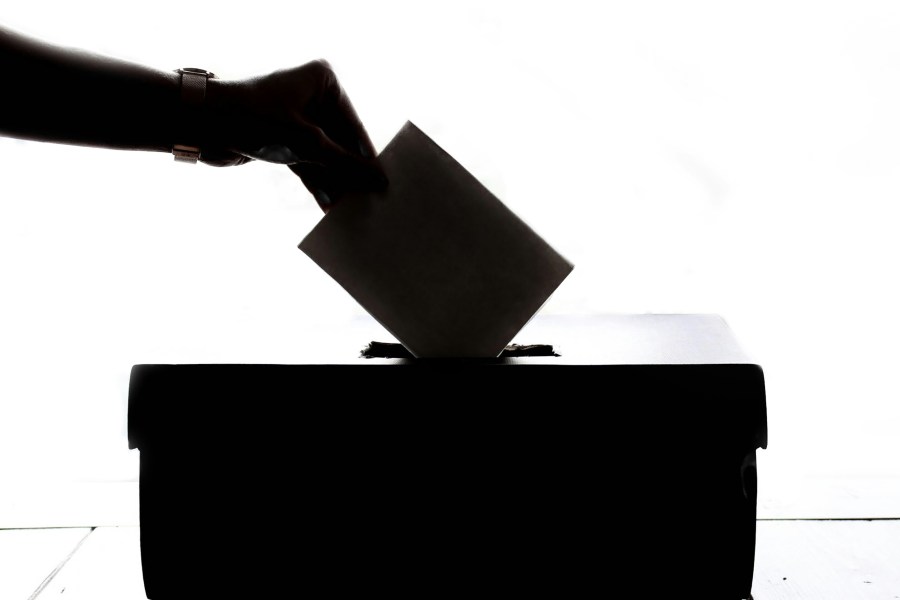
Photo by Element5 Digital on Unsplash
Rick Rosner is an accomplished television writer with credits on shows like Jimmy Kimmel Live!, Crank Yankers, and The Man Show. Over his career, he has earned multiple Writers Guild Award nominations—winning one—and an Emmy nomination. Rosner holds a broad academic background, graduating with the equivalent of eight majors. Based in Los Angeles, he continues to write and develop ideas while spending time with his wife, daughter, and two dogs.
Scott Douglas Jacobsen is the publisher of In-Sight Publishing (ISBN: 978-1-0692343) and Editor-in-Chief of In-Sight: Interviews (ISSN: 2369-6885). He writes for The Good Men Project; International Policy Digest (ISSN: 2332–9416); The Humanist (Print: ISSN 0018-7399; Online: ISSN 2163-3576); Basic Income Earth Network (UK Registered Charity 1177066); A Further Inquiry, and other media. He is a member in good standing of numerous media organizations.
License & Copyright
In-Sight Publishing by Scott Douglas Jacobsen is licensed under a Creative Commons Attribution-NonCommercial-NoDerivatives 4.0 International License. ©Scott Douglas Jacobsen and In-Sight Publishing 2012-Present. Unauthorized use or duplication of material without express permission from Scott Douglas Jacobsen strictly prohibited, excerpts and links must use full credit to Scott Douglas Jacobsen and In-Sight Publishing with direction to the original content.
 Rick Rosner