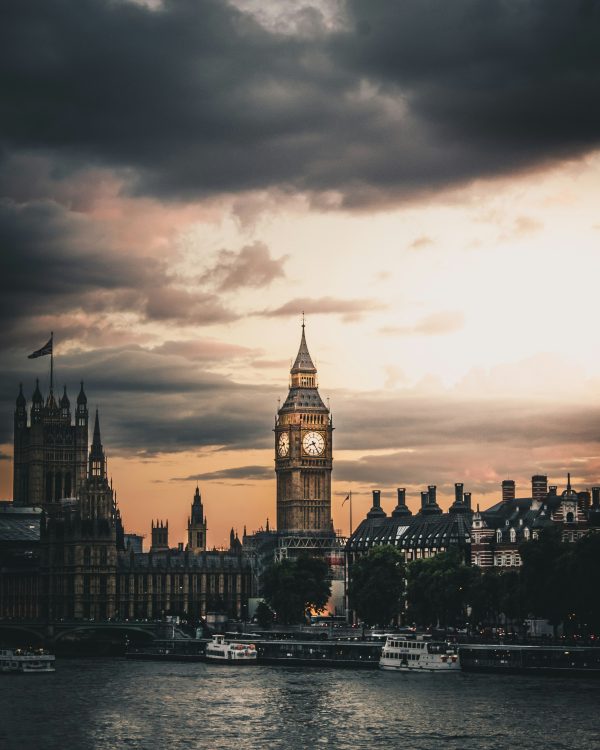
How does London’s historic architecture and class-shaped urban design intersect with contemporary Jewish anxiety and the rise of online antisemitism in the mid-2020s?
In this exchange with Scott Douglas Jacobsen, Rick Rosner describes wandering London’s neighborhoods, noting its compact housing, serious gym culture, and richly constructed public architecture that contrasts sharply with cramped domestic spaces. He reflects on class legacies embedded in the city’s layout and how shifting mobility blurs traditional accent boundaries. The discussion turns to rising antisemitism, where Rosner critiques coded online hatred and its normalization. Jacobsen highlights global Jewish anxiety amid escalating rhetoric and polarization. Both acknowledge that while London feels pleasant and even reassuring in daily encounters, broader cultural currents—AI, antisemitism, political instability—shape an increasingly uncertain social landscape ripe for scrutiny.
Scott Douglas Jacobsen: Tell me about London.
Rick Rosner: Right before I left, Lance sent me an email saying, “Let’s experiment. Try wearing a yarmulke. Let’s see how you’ll be treated in the future when they take over.” I do not buy it—his math is bad. He is worried about the wrong things. Everyone should be worried about something, but we should be more worried about AI than religious issues.
We have been walking all over London—miles a day. We pick a part of London we have not visited before, go there, and walk around. Can you still hear me? Yes? There is a video of it. In any case, everyone is fine. I am not getting a bad vibe. I do not need to wear a yarmulke.
Friday is the main congregational prayer day for Muslims, right? Whatever the day, I went to the gym late Sunday evening. I go to a gym that is open 24/7—not like an American gym at 10 p.m. on a Sunday night, which would be closed, and if it were open, nearly empty. This place was busy, mostly with Muslim men. It did not feel as if they were being trained for jihad. They were training for the same reasons everyone trains, especially young men. That was reassuring.
One difference between gyms in Los Angeles and gyms in London is that people here work out seriously. Very few sit on equipment staring at their phones. It is not shocking, but it is surprising. In Los Angeles, I often go to the gym, and every machine I want is occupied by someone who is barely using it—just sitting there on a phone, maybe doing a set every four minutes. That happens far less here.
We are staying in a bed and breakfast—an Airbnb. More than a quarter of London’s homes were built before 1919, and roughly another fifth between 1919 and 1944, despite major wartime bomb damage and later rebuilding. The housing stock is old.
The places are small. The space we are staying in is maybe 90 square feet, which is the owner’s entire dwelling. Many homes are 600 to 800 square feet. In a decent neighborhood, they might sell for more than $1,000 per square foot; in particularly desirable parts of London, more than £1,000 per square foot.
Jacobsen: How are you enjoying the scenery?
Rosner: London is a delightful city. The residential streets—row house after row house—can become tedious, but if you go to different neighborhoods and walk the high streets, there are treats everywhere: coffee, layered pastries, everything.
The English also like to split their apartments. They call them flats, though they are rarely on one level. Many places are arranged across multiple floors. In America, the same amount of space would be laid out on one floor: two bedrooms, a bathroom, a small living room, and a combined dining room and kitchen. Here, they split that same space across two floors. It seems slightly perverse, but there is a lot to look at.
The English seem more generous in their institutional architecture than in their domestic architecture.
What I mean is this: you can walk past a row of 120-year-old houses that now sell for £600,000 or £700,000. Over the years, owners have pushed out walls and attics to gain tiny amounts of extra square footage—maybe 200 or 250 square feet—negligible by American standards.
Then you walk from those row houses to an elementary school built around the same time, and the school has 20-foot ceilings. The building is three stories tall—over 60 feet—and features enormous windows, beautiful cornices, and stonework.
People lived in cramped houses, paying little rent, but their children attended schools with soaring ceilings and monumental staircases. Every city and every era carries unconscious ideas about how space should be structured. In England, class has always been central, and the spaces people inhabit reinforce class distinctions.
That said, it produces some spectacular business and institutional spaces. You see buildings like Barker’s department store on Kensington High Street. The current Art Deco building was begun in the late 1920s and 1930s, construction was interrupted by the Second World War, and the final phase was completed in the late 1950s. It is an Art Deco juggernaut—several stories tall—with dramatic vertical fins that extend upward and outward. It is a beautiful, sweeping building, constructed to sell dry goods.
Jacobsen: What about the accents? Have you noticed distinguishing markers in British accents as you walk around and interact with people?
Rosner: No. We have not really encountered strong Cockney accents—the kind with pronounced dropped consonants and glottal stops. I imitate it occasionally because I am an idiot—that is what idiots do. One sentence I have tried out is, “Jeffrey bought a horse, and it cost twenty-three thousand pounds.” You heard me say that, and she moved away from me.
But no, I do not notice sharp accent divisions. Class divisions have been disrupted, partly because it is the mid-2020s and mobility—both geographic and social—has mixed things more than in the past.
Jacobsen: What do you mean by that?
Rosner: I do not think that when you ride the Tube or walk through neighborhoods, you see the pure, unmistakable examples of aristocracy that you might have seen in the 1950s or 1960s. Back then, you would walk past grand townhouses rather than rows of subdivided houses. The idea of aristocratic space is still there, except now these homes cost two million, three million, even six million pounds—beautiful white townhouses of around 3,000 square feet across three or four floors.
But if you saw the people who live in them walking down the street, I am not sure you would immediately know they live there. Or maybe I have not paid enough attention.
I would like to know more. I would like to better understand England. It seems like a lovely place to live, especially compared to some of the more unpleasant aspects of contemporary America.
Rosner: What about the Jewish community there?
Jacobsen: Jews everywhere are anxious right now. There have been recent arrests here related to extremist slogans, and communal leaders have said that enforcement matters. But the larger point is that Jews around the world are not responsible for the policies of the Israeli government.
At the same time, many Jews—especially Reform or American Jews—have historically been comfortable staying somewhat removed from Middle Eastern politics. That does not mean they should be indifferent to rising antisemitism, including when it is amplified by influential figures and major online platforms.
You do not really go on Twitter, right?
Jacobsen: Not much, article posting board. Online discourse has become more extreme, more racist, and more openly antisemitic. In the United States, political polarization has intensified that trend. Even before the current Gaza war, antisemitic hate crimes were already rising. Since then, the atmosphere has become more heated, more hostile, and more explicit.
Political instability tends to amplify racism, and racism rarely expands without a corresponding rise in antisemitism. So conditions are likely to worsen before they improve.
Do you think the character of antisemitism has changed recently?
Rosner: Yes. It is less disguised. Online, people describe themselves as “noticers,” claiming they are just pointing things out. What they are actually doing is reviving classic antisemitic conspiracy theories—that Jews control global systems or are inherently evil.
They post constantly, and it is difficult to sanction them because they use coded language, misspellings, or euphemisms to evade moderation. That makes the antisemitism more blatant and more persistent.
It has also become more violent. There have been serious attacks internationally, and hate crimes have already risen significantly, even before the current war. The anger is not confined to a single incident or region—it is diffuse and growing.
Rick Rosner is an accomplished television writer with credits on shows like Jimmy Kimmel Live!, Crank Yankers, and The Man Show. Over his career, he has earned multiple Writers Guild Award nominations—winning one—and an Emmy nomination. Rosner holds a broad academic background, graduating with the equivalent of eight majors. Based in Los Angeles, he continues to write and develop ideas while spending time with his wife, daughter, and two dogs.
Scott Douglas Jacobsen is the publisher of In-Sight Publishing (ISBN: 978-1-0692343) and Editor-in-Chief of In-Sight: Interviews (ISSN: 2369-6885). He writes for The Good Men Project, International Policy Digest (ISSN: 2332–9416), The Humanist (Print: ISSN 0018-7399; Online: ISSN 2163-3576), Basic Income Earth Network (UK Registered Charity 1177066), A Further Inquiry, and other media. He is a member in good standing of numerous media organizations.
Photo by Luke Stackpoole on Unsplash
Last updated May 3, 2025. These terms govern all In Sight Publishing content—past, present, and future—and supersede any prior notices. In Sight Publishing by Scott Douglas Jacobsen is licensed under a Creative Commons BY‑NC‑ND 4.0; © In Sight Publishing by Scott Douglas Jacobsen 2012–Present. All trademarks, performances, databases & branding are owned by their rights holders; no use without permission. Unauthorized copying, modification, framing or public communication is prohibited. External links are not endorsed. Cookies & tracking require consent, and data processing complies with PIPEDA & GDPR; no data from children < 13 (COPPA). Content meets WCAG 2.1 AA under the Accessible Canada Act & is preserved in open archival formats with backups. Excerpts & links require full credit & hyperlink; limited quoting under fair-dealing & fair-use. All content is informational; no liability for errors or omissions: Feedback welcome, and verified errors corrected promptly. For permissions or DMCA notices, email: scott.jacobsen2025@gmail.com. Site use is governed by BC laws; content is “as‑is,” liability limited, users indemnify us; moral, performers’ & database sui generis rights reserved.
 Rick Rosner