What does a joke about Air Bud reveal about the collapsing economics of Hollywood writing in the streaming-and-AI era?
In this exchange, Scott Douglas Jacobsen steers Rick Rosner from Air Bud banter into a grim Hollywood autopsy. Rosner calls the John Oliver bit ridiculous, then notes British Columbia’s affordability and versatility for U.S. stand-ins. He argues studios chase tax credits, leaving Los Angeles scrambling. Strikes recur because profits are defended while pay structures change. Streaming, he says, slashes residuals to pennies, while season orders shrink and writers’ rooms vanish quickly. AI accelerates job loss, replacing teleprompter and cue-card work and threatening to undercut talent protections. Despite frustrations, Rosner reflects on his long run at Kimmel, with darkly comic resignation.
Scott Douglas Jacobsen: What is your fascination with air? Also, did you see any of the sketches of John Oliver?
Rick Rosner: Yes.
Jacobsen: What is your fascination with Air Bud? And second, what is your opinion of John Oliver’s commentary on Last Week Tonight, where he does a full five-minute sketch about Air Bud and how ridiculous it is?
Rosner: It is fucking ridiculous. Even more ridiculous is that they have made more than a dozen of those movies in that universe, with Air Bud and then his heirs excelling at a number of different sports.
I am not very interested in Air Bud, except when he is president. I do not think they have made a movie where he is president, but that is the joke, because obviously a dog would be a better president than our current president.
I am more interested in Jesus playing sports than Air Bud. There are a number of little statues showing Jesus playing basketball with kids, because Jesus loves everybody—especially kids and lambs—and he is always with you when you are playing junior hockey or basketball.
But the topic is this: you said that Air Bud was filmed in your hometown, just down the road in the brambles along the riverside. They like filming there because it is cheap to shoot in Canada, and British Columbia is the part of Canada closest to Hollywood and is temperate because of the coastal current, whereas much of the rest of Canada is a frozen wasteland for a good part of the year. Vancouver and the surrounding area are nice and can easily pass for America, and Air Bud and its spin-offs were shot around Greater Vancouver and places like Port Moody and Fort Langley. They use British Columbia a lot, and they use Toronto extensively to pass for New York City.
But the real topic is how fucked Hollywood is right now for writers and other talent.
I just read a long article in Harper’s detailing the many reasons why Hollywood is fucked if you are a writer. For a hundred years, Hollywood has been trying to fuck the talent—fuck over the talent. Those efforts led to the formation of the Writers Guild, which strikes regularly. They had a major strike in 1960, another in 1988, one in 2007–2008, and one in 2023, plus others in between—so roughly every fifteen to twenty years there is another big one as conditions and media change.
During the latest strike, and every time before, the producers—the people with the money—claimed that the industry was changing too fast for them to reach any agreement that would give writers and other talent any share of the profit, because the profits might go away. The profits never simply vanish, although they have been under pressure: the global box office dropped around ten percent to roughly $30.5 billion in 2024, and the North American box office is still more than twenty percent below its 2019 peak.
Movie theaters are fucked in the sense of being badly hurt. COVID and streaming nearly killed them: cinemas were shut, global box office fell by billions in 2020, and even now box office has not fully returned to pre-pandemic levels, though there has been some recovery. They sputter along, mostly catering to kids’ movies, which gives families something to do. I cannot remember the last time Carol and I paid to go to a movie.
It may have been before COVID. We’ve got everything we want via streaming, and we also have the kiss-ass opportunities for people in the guild and people in the TV Academy who can vote on things. We get invited to special screenings.
So we do go to movies in fancy screening rooms. It’s part of soft bribery to get us to vote for their projects for the Emmys and Writers Guild Awards. But yeah, the industry is pretty fucked.
This latest strike was writers trying not to be fucked by streaming—and actors too—because both unions, the SAG-AFTRA and the Writers Guild, went on strike. There was another guild that struck earlier, I think that’s producers. I don’t know. They came to an agreement early, which kind of fucked the other two unions that went on strike.
Anyway, the two issues are: you’ve got to keep AI out of the business, which will be impossible, because you can use AI to replace talent. The agreement reached is, okay, you can use AI in limited instances as long as a human gets paid for the work at some point. So the agreement reached will be the agreement breached, because AI will become pervasive and it’ll fuck a lot of people.
Seventy years ago there was a fight over the use of orchestras for movie scores. They would bring in an orchestra to do the score, and then sometime in the 1930s they reached the point where they could use pre-recorded orchestral music for the score. The work for live musicians dried up, and there was some kind of strike or something, and an agreement was reached that you had to use live musicians even when you didn’t have to. I don’t know how much of that agreement survives. I mean, they will use an orchestra from time to time, like in a Star Wars movie, but I don’t think anybody is really sweating live musicians anymore, or movies’ obligation to live musicians.
Seventy years, a hundred years after that agreement, it’ll probably be the same thing with AI: it’ll just get all in there and there’ll be some token payments to people. If they use your image as an extra, if they continue to dress it up in different outfits, for all of eternity, and some version of your face appears in 70,000 productions over the next few centuries, at least you will have gotten paid an extra $200 for that back in 2027.
So anyway, things are fucked. Production since the strike in LA dropped 40 percent in the year after the strike ended.
And I think production dropped another ten percent the year after that. Los Angeles has been slow to throw as much money at productions through tax breaks as other states like New Mexico. Albuquerque is the perfect location for Breaking Bad—and, yes, because Albuquerque has a meth problem—but they didn’t choose Albuquerque for that reason; they chose it because New Mexico offered them a huge amount of tax breaks. Georgia does the same thing, and so does North Carolina.
I do not know what the exact situation is with Canada, but overall it is just cheaper to shoot there. Los Angeles dragged its feet and was complacent, assuming productions would stay here because this is where the studios are. No: the studios took their productions elsewhere. Only recently has the state government begun to open its purse strings, but nowhere near enough. So production has gone away.
AI is taking away jobs among talent and crew. All the cue-card people—the people who hold up the cards with the lines—and the people who type into the teleprompter are being replaced. You do not need people transcribing into the teleprompter; AI can do the transcription. So Carol knows two people who have lost their jobs around that kind of work.
I think I mentioned that when I was working during the golden age—getting paid real money—I was making a few thousand dollars a week writing for TV.
So: a few thousand dollars a week, and then a few hundred dollars every time they reran one of the Kimmel shows, which they did every week. Most talk shows tape four shows a week, and the Friday show is a repeat. That residual money helped pay for our house and helped put our kids through college.
Recently, I started getting residuals again. Normally, I would get a few checks a year—thirty or forty bucks—for something running somewhere. But recently we started getting inch-thick avalanches of checks because apparently somebody started streaming Kimmel—probably not Netflix, I would have noticed that—but maybe on YouTube or some other streamer.
But instead of the checks being for three hundred and fifty dollars, they are for three cents. Literally two and three cents. Carol took in a stack of checks more than an inch high—more than a hundred checks—and they totaled seven dollars. That is the kind of residual writers get from streaming now.
And we talked about the short writers’ rooms. Back in the golden age of the networks, a season order for a show was twenty-six episodes, which kept you employed for eight months at a salary that was enough to tide you over until the next season or until you found your next job. Now series orders are six episodes, eight episodes—and you are done in two months, or even one. They do not keep you around for production. And good luck getting another writing job.
Writers now: it used to be that one successful series that ran two, three, four years would get you a house in Encino—enough salary for the down payment and mortgage—and you would get work frequently enough to keep making those payments. No more. If you are a writer starting out now, you have two roommates, you are working for DoorDash at night, or you are waiting tables. I saw it again and again in stories about how fucked writers are: the people who can afford to write now are people with rich parents. People are saying that writing in Hollywood has become a career for the wealthy.
Things are fucked now, and I was lucky to have been employed when I was employed. The people working on Kimmelnow are still lucky as hell. I was unlucky enough not to be indispensable, and unlucky enough to keep wanting publicity for my stupid IQ and myself, hoping that would lead to other opportunities—which pissed them off over at Kimmel. But overall, I was lucky. I wrote on that show for nearly twelve years.
Rick Rosner is an accomplished television writer with credits on shows like Jimmy Kimmel Live!, Crank Yankers, and The Man Show. Over his career, he has earned multiple Writers Guild Award nominations—winning one—and an Emmy nomination. Rosner holds a broad academic background, graduating with the equivalent of eight majors. Based in Los Angeles, he continues to write and develop ideas while spending time with his wife, daughter, and two dogs.
Scott Douglas Jacobsen is the publisher of In-Sight Publishing (ISBN: 978-1-0692343) and Editor-in-Chief of In-Sight: Interviews (ISSN: 2369-6885). He writes for The Good Men Project, International Policy Digest (ISSN: 2332–9416), The Humanist (Print: ISSN 0018-7399; Online: ISSN 2163-3576), Basic Income Earth Network (UK Registered Charity 1177066), A Further Inquiry, and other media. He is a member in good standing of numerous media organizations.
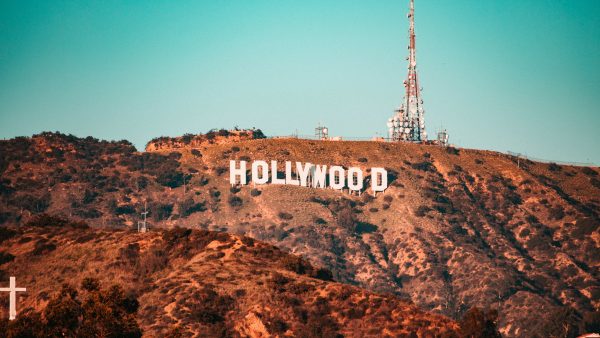
Photo by Vincentas Liskauskas on Unsplash
Last updated May 3, 2025. These terms govern all In Sight Publishing content—past, present, and future—and supersede any prior notices. In Sight Publishing by Scott Douglas Jacobsen is licensed under a Creative Commons BY‑NC‑ND 4.0; © In Sight Publishing by Scott Douglas Jacobsen 2012–Present. All trademarks, performances, databases & branding are owned by their rights holders; no use without permission. Unauthorized copying, modification, framing or public communication is prohibited. External links are not endorsed. Cookies & tracking require consent, and data processing complies with PIPEDA & GDPR; no data from children < 13 (COPPA). Content meets WCAG 2.1 AA under the Accessible Canada Act & is preserved in open archival formats with backups. Excerpts & links require full credit & hyperlink; limited quoting under fair-dealing & fair-use. All content is informational; no liability for errors or omissions: Feedback welcome, and verified errors corrected promptly. For permissions or DMCA notices, email: scott.jacobsen2025@gmail.com. Site use is governed by BC laws; content is “as‑is,” liability limited, users indemnify us; moral, performers’ & database sui generis rights reserved.
 Rick Rosner