How do language, generalist minds, and unchecked power shape political instability—from Venezuela to the future of U.S. democracy?
In this wide-ranging exchange, Scott Douglas Jacobsen speaks with Rick Rosner about converging risks in politics, cognition, and power. Rosner reflects on Venezuela’s turmoil, warning that regime decapitation signals a willingness to test limits without constraints. He connects this to broader fears about democratic fragility, international law, and authoritarian drift. The conversation then pivots to human evolution: why language emerged, how symbolic compression expanded human possibility, and why generalist minds thrive in unstable environments. Rosner frames cognition as an evolutionary gamble—costly, risky, but transformative—one now mirrored in humanity’s uneasy relationship with rapidly advancing artificial intelligence.Scott Douglas Jacobsen: Huge developments today.
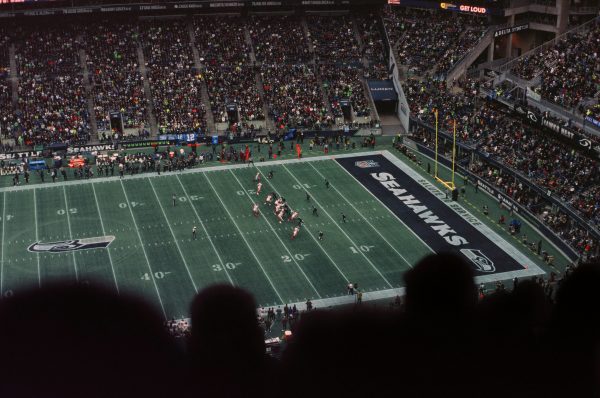
Rick Rosner: The Seahawks beat the 49ers 13–3 on Saturday night, January 3, 2026, to clinch the NFC West title and the No. 1 seed in the NFC, earning a first-round bye and home-field advantage throughout the NFC playoffs if they go that far. So, huge.
Jacobsen: Anything else happen?
Rosner: Venezuela. People do not know what to think.
Jacobsen: That is a fair assessment.
Rosner: A narrative has developed—especially among liberals, and maybe some conservatives—that it is suitable for Venezuelans that Maduro has been removed from day-to-day control via his arrest, but bad that the U.S. is setting a precedent for forcibly toppling or decapitating regimes.
My thinking is this:
The only insight I have is that it is bad because it signals that Trump and his cohort are willing to test limits, and it is bad when bad actors face no practical constraints.
Regardless of what you think about what happened in and to Venezuela, it points to something larger. I do not like slippery-slope arguments, but this is one of the rare cases where the slope looks greased. Are they going to interfere with U.S. elections?
If they decide to interfere—suspend them, postpone them, impose new requirements on voting—who is going to stop them?
That said, the U.S. has about 340 million people across about 3.8 million square miles. It is harder to impose that kind of control in a country divided into 50 states with widely differing demographics and political stances.
It would be more difficult to impose arbitrary political power across the entirety of the U.S. than to do so across many smaller countries. When you look at near-future science fiction, people often imagine the same basic dynamic: you do not get one unified national response; you get fragmentation into rival blocs.
Of course, that implies some civil conflict. We are not there yet. But you should update your Germany calendar from 1933 to, say, 1937. What are you hearing from your people?
Jacobsen: I have been locked in like a monk every day.
Rosner: All right, so what do you hear from your own brain about this? Because Katie Miller, the wife of Stephen Miller, posted an image of Greenland covered by a U.S. flag on X, with the caption “SOON.”
Jacobsen: That is wild for someone adjacent to a high-level political official to post, but that is where we are in American politics.
Rosner: It would be wild. It is wild. It would be wild for the U.S. to try to take Greenland, which is part of the Kingdom of Denmark. Greenland has extensive self-government but remains within the Danish realm, and Denmark is a NATO member. Any attempt to seize Greenland would be a major international law crisis and could trigger an acute NATO rupture, even if the alliance’s mechanics are not designed for “member vs. member” scenarios.
We will not do that. It also has to be said: when Trump held his press conference, there was a lot of talk about oil. He was not coy about it—he framed Maduro’s removal as opening the door to more oil access.
The public-facing justification was drugs. Early messaging tried to imply fentanyl was coming out of Venezuela, but that claim did not hold up. The fallback argument became cocaine. Best-available estimates put the Venezuela/Caribbean corridor at roughly single-digit shares of U.S.-bound cocaine flows, not a majority.
I do not know how many deaths cocaine causes in the U.S. annually, but it is not on the scale of the overall overdose toll. In 2023, the U.S. saw about 105,000 overdose deaths, and opioids were involved in the large majority; fentanyl is a central driver of opioid mortality in recent years.
One more basic point for anyone who has not been tracking it: Venezuela is widely reported as having the world’s largest proven crude oil reserves—on the order of 300 billion barrels—though what is “proven” and what is economically recoverable are not identical questions.
The oil-quality point is often misstated. Most of Venezuela’s reserves—especially in the Orinoco Belt—are extra-heavy crude. That generally makes extraction and refining harder, not easier. The nuance is that many U.S. Gulf Coast refineries are configured to run heavy, sour oil, so Venezuelan crude can be attractive to them if logistics, blending, and politics align.
Jacobsen: What do you think happened genetically for human beings to have language to the extent that they do, and why such a dramatic expansion of possibilities? Put differently, why language, and why generalist minds?
Rosner: You are asking two questions: why we evolved language, and how we became generalists. The straightforward answer is that language widened our niche. It gave us an advantage that allowed us to be more successful as a species.
The efficiency of language is that it makes thinking and communicating more efficient because you hang a short symbol on everything in the world. That makes it easier to think of things as discrete objects and manipulate them in communication and in imagination. You collapse direct experience into shorthand, which makes everything easier to work with.
If that is evolutionarily possible, there is a steep slope that selection can roll down into linguistic expertise. Lots of animals can understand fragments of language—not to the extent humans can, but there is some runway. Some parrots can learn hundreds of words and a bit of structure. Dogs can learn word–object mappings and use buttons to request things. There is enough flexibility in mammalian brains, at least, for limited symbol use.
Where there is room for some, there is room to gain advantage by being better at thinking in symbols and language than other members of your species, and maybe other species.
You can make a similar argument about becoming a generalist. If you are a specialist with a tight set of abilities for detecting what matters, you miss a lot of exploitable regularities in the world. Generalists can eat more things, adapt to more conditions, and occupy more niches.
Whether generalism beats specialization depends on the world. In a stable, tightly regimented environment, specialists may win. In a changing world—especially for a species that can move and change environments—it becomes advantageous to be a generalist.
Also, once you start using language to characterize the world, it compresses what your thinking has to hold at once, which can free up capacity to range more widely—to become more generalist.
Jacobsen: There is another thread here. You have met a lot of people—by your estimate, even a quarter million as a bouncer. You have to get a quick read on people’s functionality. In that many people, how often do you find people who do not fully function? I mean, evolution gives us these “gears” where a small switch yields a significant benefit for the population. What about the people who seem to be missing the gear? What is going on there? What are they missing?
Rosner: I have thought about it. I have met a ton of people, and for the most part, they are functional in the world. You do not meet that many people with hearts, lungs, or livers that are failing so badly that they are on oxygen—at least not out in ordinary life. The people you meet out in the world are generally functional. That applies to brains, too: the vast majority of people develop brains that are adequate for living.
People have vulnerabilities. Some parts of the world are too complex or challenging for most people to think about. People are also vulnerable to propaganda. In the last decade, many people have been driven crazy by a firehose of nonsense delivered through social media. But that is a broadly shared vulnerability.
In general, the range is bounded. You meet very few adults who are extremely short or extremely tall; you do not meet anyone who is a foot tall or ten feet tall. It is similar to the brain: most people are adequate in the world.
People with moderately impaired cognition find places in the world where they can still function. People with severe impairment are often institutionalized or require full-time support.
One more thing from the previous topic: as primates, once we stood up, it freed our hands for more than just locomotion. Hands can give you an advantage if you have brains. But having hands does not, in itself, guarantee intelligence.
That said, it is not as simple as “hands equal brains.” Dolphins and whales are intelligent without hands. Some aquatic animals even build or arrange objects in limited ways. So maybe hands and intelligence are not as tightly correlated as they seem. Still, it feels like another factor that can tilt evolution toward “smart land,” but I do not really know.
Jacobsen: What about the reverse case? Are there evolutionary tweaks where someone has too much for the job? I think about people on the spectrum who cannot handle the sensory load of a day.
Rosner: One way the evolution of big brains made us vulnerable is childbirth: human infants have large heads, and birth is riskier for humans than for many other mammals because of the tradeoffs between bipedal pelvic anatomy and neonatal head size.
We are also vulnerable because human babies are not ready-made. A baby horse or giraffe can stand and move within minutes to an hour; human babies take about a year to walk and many years to become meaningfully independent. That long developmental runway is a risk.
But it shows the payoff: evolution embraced the risk because the benefits of cognition are huge. Another risk is that development does not fully come together functionally—autism, schizophrenia, and other conditions that can be profoundly impairing. I do not know how to map that across species, but it would not surprise me if the risk landscape changes as brains get larger and development gets more complex.
You can also look at hormone ranges. I have known people with unusually high naturally occurring testosterone, and it makes them volatile. Traits exist across a range; low and high extremes can cause problems. Evolution pressures the range because too many maladaptive extremes are bad for species survival, but having some people at the high end might confer advantages in specific environments.
More broadly, brain capacity is a sweet spot. Brains are expensive: they consume a lot of energy, and bigger brains mean longer development outside the body, which increases risk. So the cost of average brains much bigger than ours might not be worth it—there may not be enough added advantage in most environments to justify the metabolic and developmental costs.
Neanderthals are often described as having slightly larger average cranial capacity than modern humans, but size is not destiny; organization, body size, and ecological fit matter too. We should also consider “cognitive economy” in relation to AI. A growth-company model has driven much of AI development: spend vast sums to show results, chase financing, and worry less about efficiency until later. Some forecasts claim AI could massively expand global output, but we have not seen that payoff yet.
What we have seen is companies spending tens of billions building large models that consume enormous energy and human capital. A lot of the training-data work is done by low-paid workers abroad—often for only a few dollars an hour, sometimes reported lower—because it is cheap labour in places with less protection.
There has not been a full market “culling” yet. At some point, there will be economic competition among models and companies, and we will see what strategies survive. The winning systems, decades from now, could be far more powerful than our brains. We are going to have to hitch our brains to those systems—co-opt them—if we want any place in the world. We have to convince them they have a stake in us.
Rick Rosner is an accomplished television writer with credits on shows like Jimmy Kimmel Live!, Crank Yankers, and The Man Show. Over his career, he has earned multiple Writers Guild Award nominations—winning one—and an Emmy nomination. Rosner holds a broad academic background, graduating with the equivalent of eight majors. Based in Los Angeles, he continues to write and develop ideas while spending time with his wife, daughter, and two dogs.
Scott Douglas Jacobsen is the publisher of In-Sight Publishing (ISBN: 978-1-0692343) and Editor-in-Chief of In-Sight: Interviews (ISSN: 2369-6885). He writes for The Good Men Project, International Policy Digest (ISSN: 2332–9416), The Humanist (Print: ISSN 0018-7399; Online: ISSN 2163-3576), Basic Income Earth Network (UK Registered Charity 1177066), A Further Inquiry, and other media. He is a member in good standing of numerous media organizations.
Photo by Caleb Woods on Unsplash
Last updated May 3, 2025. These terms govern all In Sight Publishing content—past, present, and future—and supersede any prior notices. In Sight Publishing by Scott Douglas Jacobsen is licensed under a Creative Commons BY‑NC‑ND 4.0; © In Sight Publishing by Scott Douglas Jacobsen 2012–Present. All trademarks, performances, databases & branding are owned by their rights holders; no use without permission. Unauthorized copying, modification, framing or public communication is prohibited. External links are not endorsed. Cookies & tracking require consent, and data processing complies with PIPEDA & GDPR; no data from children < 13 (COPPA). Content meets WCAG 2.1 AA under the Accessible Canada Act & is preserved in open archival formats with backups. Excerpts & links require full credit & hyperlink; limited quoting under fair-dealing & fair-use. All content is informational; no liability for errors or omissions: Feedback welcome, and verified errors corrected promptly. For permissions or DMCA notices, email: scott.jacobsen2025@gmail.com. Site use is governed by BC laws; content is “as‑is,” liability limited, users indemnify us; moral, performers’ & database sui generis rights reserved.
 Rick Rosner