Is the claim that penises are “sleek” and vaginas are “chaos” anything more than misogynistic nonsense?
In this exchange, Scott Douglas Jacobsen challenges a viral, misogynistic trope that praises the penis as “sleek” while dismissing vaginas as “chaos.” Rick Rosner responds by flipping the premise with evolutionary common sense and comic realism. He explains that internal genital design offers protection, that unsolicited penis images rarely arouse women, and that attraction is more about consent and context than anatomy. Rosner widens the lens to primate biology, endurance evolution, and sexual signaling, puncturing macho myths with humor—from dung beetles to hydraulics—while grounding the discussion in biology, culture, and lived experience.
Scott Douglas Jacobsen: I saw an absurd, misogynistic riff circulating online that claimed a penis is “sleek, functional, and symmetrical,” and that vaginas are “chaos incarnate.”
Rick Rosner: Most standups take the opposite point of view, which is at least arguably more reasonable: the vagina has a better design. It is internal, so it is more protected than external genitals, which are out there taking random impacts and general life abuse. This shows up in routines where a standup says nobody wants to see a picture of your dick.
For one thing, a dick is a dick. A lot of people do not want to see it. For another thing, a random penis photo usually is not arousing to women in the way some men assume. By contrast, if someone sends an explicit photo intentionally, what can make it feel more exciting is the signal of sexual interest and consent to play—not the anatomy itself. Men, generally, do not need much convincing that sex exists as a concept.
Maybe if your dick were exceptional, it might interest some people. On the other hand, it might intimidate some people, or just not match someone’s preferences. And in any case, penises are kind of ridiculous-looking. We are ridiculous-looking.
Think of dung beetles. The males compete, like animals do, but they are still tiny beetles whose daily business is pushing dung around. We are not that different. When guys scrap and battle for dominance, we are still limited by the brute facts of biology and physics.
Humans are not the weakest primates. We are not the strongest in raw upper-body strength compared with chimpanzees or gorillas, but we are unusually effective endurance animals, tool users, and cooperative planners. And yes, lemurs are primates, just on an earlier evolutionary branch than monkeys and apes.
We are relatively hairless. Our genital anatomy is distinctive among primates, but “most impressive” depends on what you measure and who is judging. Humans are also unusual in that sexual behaviour is not restricted to short, obvious heat periods the way it is in many mammals; sexual interest is more continuous and shaped by hormones, relationships, culture, and individual variation.
So yes, evolution shaped traits like breasts, hips, and genital signalling in complicated ways. But still, a penis is a floppy bit of tissue that becomes rigid because of hydraulics. It is ridiculous. It is fucking ridiculous.
Jacobsen: There was a Monty Python song about the penis. Eric Idle sang it: “Isn’t it wonderful? Isn’t it delightful to have a penis?”
Rosner: It is, because it is the easiest way to get a non-addictive endorphin rush. And if you want penises in show business, there was a stage show called Puppetry of the Penis, where performers made shapes—basically, dick origami. I did not see it, but I read enough about it. People went to clubs and watched men fold their penises into various forms.
There was more than one guy. Anyway, all right. On to other shit.
Rick Rosner is an accomplished television writer with credits on shows like Jimmy Kimmel Live!, Crank Yankers, and The Man Show. Over his career, he has earned multiple Writers Guild Award nominations—winning one—and an Emmy nomination. Rosner holds a broad academic background, graduating with the equivalent of eight majors. Based in Los Angeles, he continues to write and develop ideas while spending time with his wife, daughter, and two dogs.
Scott Douglas Jacobsen is the publisher of In-Sight Publishing (ISBN: 978-1-0692343) and Editor-in-Chief of In-Sight: Interviews (ISSN: 2369-6885). He writes for The Good Men Project, International Policy Digest (ISSN: 2332–9416), The Humanist (Print: ISSN 0018-7399; Online: ISSN 2163-3576), Basic Income Earth Network (UK Registered Charity 1177066), A Further Inquiry, and other media. He is a member in good standing of numerous media organizations.
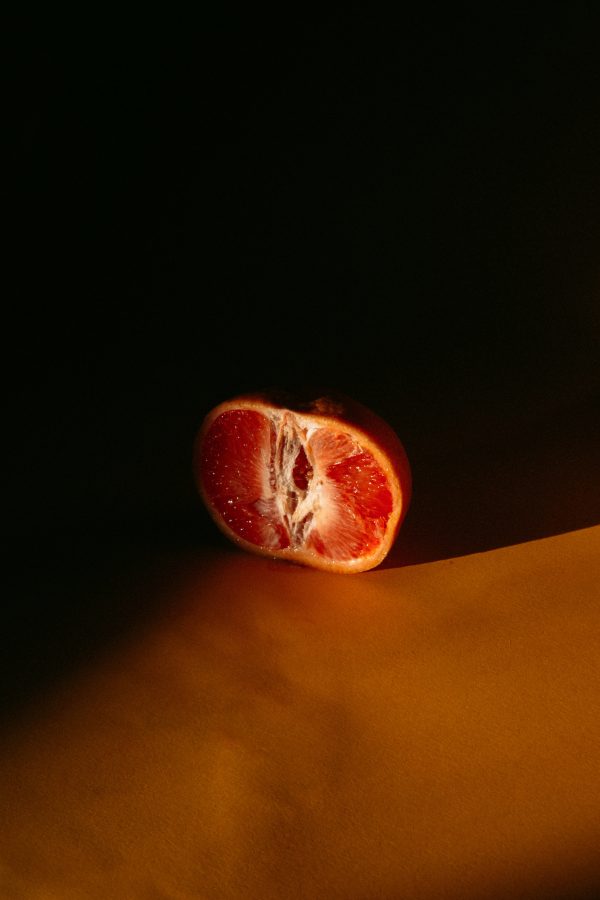
Photo by charlesdeluvio on Unsplash
Last updated May 3, 2025. These terms govern all In Sight Publishing content—past, present, and future—and supersede any prior notices. In Sight Publishing by Scott Douglas Jacobsen is licensed under a Creative Commons BY‑NC‑ND 4.0; © In Sight Publishing by Scott Douglas Jacobsen 2012–Present. All trademarks, performances, databases & branding are owned by their rights holders; no use without permission. Unauthorized copying, modification, framing or public communication is prohibited. External links are not endorsed. Cookies & tracking require consent, and data processing complies with PIPEDA & GDPR; no data from children < 13 (COPPA). Content meets WCAG 2.1 AA under the Accessible Canada Act & is preserved in open archival formats with backups. Excerpts & links require full credit & hyperlink; limited quoting under fair-dealing & fair-use. All content is informational; no liability for errors or omissions: Feedback welcome, and verified errors corrected promptly. For permissions or DMCA notices, email: scott.jacobsen2025@gmail.com. Site use is governed by BC laws; content is “as‑is,” liability limited, users indemnify us; moral, performers’ & database sui generis rights reserved.
 Rick Rosner