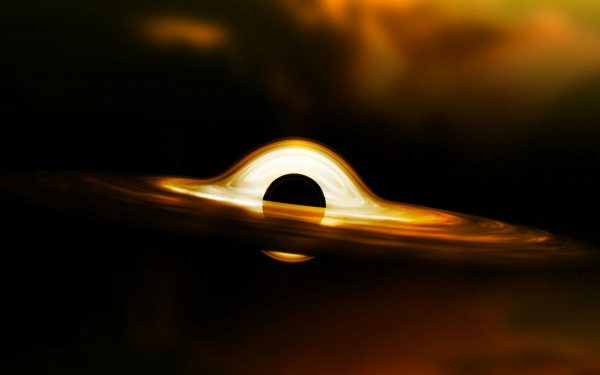
How do “gear locking” in cosmic evolution and information constraints—from recombination to black holes—shape what can be known, preserved, and inferred in the universe?
In this exchange, Scott Douglas Jacobsen frames cosmic history as “gear locking,” where expansion, cooling, phase transitions, and decoupling events constrain what can stably exist, making the universe’s trajectory effectively irreversible under rising entropy. Rick Rosner shifts the emphasis toward information: what appears absent is often inaccessible, scrambled, or unrecoverable, especially under gravitational collapse and within black holes, whose thermodynamic properties sharpen the information problem. They briefly pivot to U.S. politics, then return to quantum entanglement, distinguishing measurable preparation and detection timescales from any faster-than-light signalling.
Scott Douglas Jacobsen: I keep thinking in terms of what I call “gear locking.” In the early universe, as it expanded and cooled, characteristic energy, length, and time scales changed, and the relevant physics shifted.
Some of these shifts involved symmetry breaking and phase transitions in quantum fields, along with decoupling events in which interactions became ineffective as conditions changed.
These changes constrained what could exist stably and in what form—for example, a hot quark–gluon plasma transitioning to bound hadrons, then primordial nucleosynthesis forming light nuclei, and later recombination allowing neutral atoms to form.
Each new regime is constrained by what came before, and the universe’s history is effectively irreversible because entropy increases. That historical “locking-in” is the most crucial point.
Rick Rosner: I do not think of this primarily as phase transitions, or as a simple evolution from early to later stages. The universe exists to create and preserve information.
Information is not the only thing that can exist in physics, but it is a powerful way to describe physical states. In modern physics, information is tied to the number of possible microstates consistent with a macrostate, and to entropy. In that sense, what looks like an absence of information is usually a situation in which information is inaccessible, scrambled, or not practically recoverable—not literally absent.
Under extreme gravitational collapse, matter can enter regimes where physical descriptions become highly compressed and difficult to resolve. Gravitational collapse can also liberate energy: radiation can be emitted during collapse and accretion, and mergers can emit gravitational waves.
In a practical sense, some extreme environments can approximate conditions similar to those of the early universe in temperature or density, but they are not direct replicas of the early universe.
As a speculative picture, one could imagine a transition from a relatively featureless, high-entropy configuration to one with more distinguishable structure. In established thermodynamics, however, structure formation can occur while total entropy still increases, because gravity allows local decreases in entropy at the expense of larger increases elsewhere.
A “big-bang-like bloom” from collapse is therefore not part of standard cosmology and remains hypothetical.
What would enable such a process is unknown, and there is no confirmed mechanism showing that black holes generate new universes. Theoretical literature discusses “baby universes,” but these ideas are speculative and lack empirical confirmation.
Likewise, whether information associated with a black hole could be shared with a parent universe is unresolved. What is on firmer ground is that black holes have entropy and temperature, emit Hawking radiation, and pose a fundamental information problem in theoretical physics.
Any definitive answers would depend on a successful theory of quantum gravity and observational evidence. At present, the intuition that gravitational collapse resembles an “early-universe-like” state functions best as an analogy rather than an established physical claim.
What we see looks like the late universe—the collapsed state. Matter, once stars run out of usable nuclear fuel, collapses gravitationally under pressure. In such conditions, matter can enter degenerate states.
As collapse occurs, energy and radiation can be emitted, carrying information outward in some forms. Whether that is the right way to think about it is unclear.
The gravitational agglomeration of matter may itself encode information, in the sense that large-scale structure reflects physical laws and initial conditions. However, the detailed information contained in precise microscopic configurations of particles is scrambled mainly during collapse. That does not mean data is destroyed in established physics, but that it becomes inaccessible or effectively unrecoverable.
In simple terms, highly collapsed regions of the universe tend to obscure information, while expanding regions allow structure and distinguishability to develop.
Whether collapsed matter could ever undergo a process resembling a “big-bang-like” expansion, and whether any resulting information could be shared with the surrounding universe, would depend on spacetime geometry and gravitational curvature. There is no confirmed mechanism for this, and such ideas remain speculative.
Framed more carefully, this is an information story. As the universe evolves from extremely dense, hot, and opaque conditions to cooler and more expanded ones, the kinds of information that can be preserved and observed increase.
Early, highly compressed regimes are opaque because interactions constantly scatter energy, erasing recoverable distinctions.
In standard cosmology, the universe becomes transparent only after recombination, roughly 380,000 years after the Big Bang, when electrons combine with nuclei to form neutral atoms. Only then can photons travel freely without constant scattering.
Before that, the universe is ionized plasma, and electromagnetic information cannot propagate in a stable, recoverable way.
So it is not accurate to say the early universe “contained no information,” but rather that information could not be preserved or transmitted in forms accessible to observers.
As the universe cooled and expanded, stable structures formed, allowing information to persist. In the later or middle universe—such as the one we inhabit—conditions are calm enough that information can be retained over long timescales without being erased by background radiation or constant high-energy interactions.
That is how I think about phase transitions and cosmic time: not simply as moments on a timeline, but as shifts from opaque, high-energy regimes where information is inaccessible to structured regimes where information can be preserved, accumulated, and studied.
Another thing we have talked about is hidden information. Most of the information in the universe is not accessible within the current informational configuration. Much of it is effectively locked away in earlier conditions, close to the universe’s initial state.
The question is how some of that information can be liberated—unfrozen, so to speak—and incorporated into the current informational regime. In that sense, it is really an information problem.
Jacobsen: Do you want to switch to a different topic briefly?
Rosner: Sure. Trump appears to have backed away from his rhetoric about Greenland. Earlier, he made aggressive, ambiguous statements suggesting that the United States could acquire Greenland through economic pressure or force.
More recently, he has shifted to language about negotiations and “concepts of a solution” that would work for the United States, the European Union, and NATO. That kind of language usually signals a retreat while still allowing him to declare victory rhetorically.
The outcome is not ownership of Greenland. The idea of acquiring Greenland is not new—U.S. interest dates back to the nineteenth century—but Trump was unusually explicit and belligerent in how he framed it.
In public remarks, he repeatedly misspoke, referring to Greenland as Iceland, which drew widespread criticism.
Many commentators have pointed out that similar verbal errors by other presidents would likely have triggered far more intense scrutiny. There is a growing perception of a double standard, where Trump’s errors and erratic behaviour are normalized because audiences have become habituated to them.
Journalists and commentators have noted public frustration with this normalization. Some argue that there should be a serious discussion of presidential competence, rather than treating confusion, aggression, or inconsistency as mere negotiating style.
That said, the constitutional mechanisms for removal are political, not clinical. The Twenty-Fifth Amendment requires action by the cabinet, which is unlikely given political loyalty.
Impeachment requires congressional action, which is also unlikely under current alignments. As a result, critics conclude that the system is effectively locked in, with limited practical options for intervention.
There is also the political reality that removing Trump would elevate his vice president, which complicates strategic calculations for his opponents.
Vance is unsettling in a different way. He appears to have a more opaque and potentially more disturbing agenda than Trump. He is younger, more disciplined intellectually, and closely aligned with tech elites, including figures like Peter Thiel. That combination worries people.
At the same time, he lacks charisma and does not communicate in a way that persuades broad audiences. His goals, and those of the tech-aligned faction around him, are not clearly articulated. That ambiguity creates a perverse form of insulation for Trump, because many people are more afraid of what might replace him.
It is at least encouraging that the Greenland episode collapsed so quickly, assuming it is truly over. That outcome suggests a limitation on Trump’s capacity to execute large, coherent geopolitical projects.
Historical comparisons are often made carelessly, but one difference is effectiveness. Trump is capable of narrow actions, such as tax policy favouring the wealthy or aggressive symbolic gestures, but he has shown limited ability to carry out sustained, complex plans. In that sense, his inefficiency is a relief.
Jacobsen: Turning back to physics, I recently learned that in experiments involving quantum entanglement, correlations are not observed in a way that implies instantaneous physical signalling.
Some experiments measure characteristic timescales associated with interactions or measurements, sometimes on the order of hundreds of attoseconds. That does not mean entanglement itself “takes time” to propagate in the classical sense. Instead, it reflects how quickly experimental systems can be prepared, manipulated, or measured.
What matters is that entanglement does not allow faster-than-light communication, even though correlated outcomes appear immediately once measurements are compared.
The timescales involved are extraordinarily small and experimentally measurable, which is remarkable. I would like to understand better how those measurements are made.
This undercuts some of the more mystical interpretations of entanglement as a perfectly unified cosmic web. The phenomenon is precise, constrained, and deeply mathematical.
If there are characteristic timescales involved in creating or probing entanglement, that points to structured physical processes rather than vague holistic unity.
That raises another question: whether any of these timescales function like fundamental constants, such as the speed of light, which is invariant across reference frames.
Rosner: I do not know enough quantum mechanics to answer that. These are open and interesting questions, but speculation should stay within what the theory and experiments actually support.
One broader idea I return to is that not every physical interaction leaves a record. In fact, most interactions do not. A trace exists only when an interaction produces downstream effects that persist and influence later states. If something happens and produces no lasting effects, it leaves no recoverable record.
Entanglement is interesting in this context because it provides a potential mechanism for correlation that can later be revealed, even if it does not transmit information in the ordinary sense. That fits with the broader pattern of the universe: countless interactions occur, but only a small subset generate durable, observable consequences.
Most interactions occur only in a virtual or transient sense. Something happens, but the specific details are not preserved. Inside a star, there are an enormous number of interactions per second—on the order of trillions of trillions—and almost none of them leave a durable trace.
Photons produced in a stellar interior typically travel only a very short distance before being absorbed or scattered again. They do not escape carrying a clean record of the interaction that produced them. In that environment, most processes are quickly overwritten by subsequent interactions.
One clearer example of a lasting change is nuclear fusion. When light nuclei fuse to form a heavier nucleus, such as helium, the result is relatively stable.
A helium nucleus formed in a star is less likely to be immediately undone than many other transient processes. Even so, the detailed history leading to that helium nucleus—every interaction that preceded it—is not recoverable. That history is lost in the statistical chaos of the stellar interior.
Entanglement offers, at best, a limited way for correlations to persist, but it is fragile. Any information associated with it can still be disrupted or rendered inaccessible by further interactions. That fragility mirrors the broader universe.
In that sense, the universe must contain the information of the universe. Individual microscopic interactions are overwhelmingly unlikely to produce records that endure. Most events do not leave durable, isolatable traces.
There is a deeper point here, one that is well-worn but still important. The universe is fundamentally structured at the quantum level.
Creating an entangled state involves physical interactions that occur over a measurable, though extremely short, timescale. Once entanglement is established, the correlated outcomes of measurements appear immediately when compared, regardless of distance.
That does not imply faster-than-light signalling, but it does reflect a nonclassical structure in the definition of quantum states.
So there is an asymmetry: establishing entanglement requires interaction and time, while the correlations of an entangled state do not depend on spatial separation.
That is striking, but it should be described carefully. The correlations are consistent with relativity because no usable information is transmitted instantaneously.
Some interpretations frame this as a kind of “handshake” between different points in time. Ideas involving advanced and retarded waves—where influences propagate both forward and backward in time—exist in specific interpretations of physics, such as absorber or time-symmetric theories.
These interpretations are mathematically consistent with known laws but remain interpretive frameworks rather than experimental facts.
Within that speculative framing, one might imagine entanglement as a set of constraints that link events across time and space. However, this language should be understood metaphorically or interpretively, not as a literal description of causal signals travelling backward in time.
If a particle here has a particular property, and it is entangled with another particle elsewhere, then once a measurement is made, you can infer the corresponding property of the distant particle. People find that unsettling.
What matters is that nothing is being transmitted at the moment of measurement. The correlation was established earlier, when the particles interacted and became entangled.
You can think of that earlier interaction as forming a constraint. The particles entered a joint quantum state at that point.
When you later measure one particle and find, for example, a particular spin orientation, you can infer the outcome for the other particle because the joint state requires consistency.
The mathematics enforces that constraint without revealing any usable information about the distant particle before measurement.
Some interpretations describe this using time-symmetric language, such as retarded and advanced influences, in which constraints link the past and present.
That is one way to conceptualize it, but it should not be taken to mean that signals are literally travelling backward in time. The correlations can be described entirely within standard quantum mechanics without violating causality or relativity.
In that sense, effects do not determine causes, and the past cannot be changed. What is enforced is a relationship that was already established when the entangled state was created.
Later measurements reveal outcomes consistent with that earlier relationship.
Consider two photons created together and then travelling for billions of years in opposite directions without interacting with anything else.
Eventually, each photon interacts locally with its environment at a very different place and time in the universe. Those interactions are correlated, but they do not alter anything that already happened. They do not transmit information between those regions faster than light.
You may learn the polarization of a distant photon faster than light could have carried a signal to you, but no information has travelled.
You know the outcome because of the structure of the entangled state, not because anything was sent from one location to another at the moment of measurement.
An analogy is setting up a constraint in advance. If you paint a billboard red and secure it so nothing can change it, then travel a hundred light-years away, you can know instantly that the billboard is red.
You are not receiving information from that distant location. You know the conditions you arranged earlier. Entanglement works similarly: the “deal” was made at creation.
Nothing about this changes the past, and nothing violates the speed of light. It is not communication; it is correlation enforced by prior conditions.
One way to look at it is that the universe may be built out of these constraints—durable relationships established by interactions and preserved over time.
What sometimes gets dismissed as mystical or “woo-woo” entanglement may be an ordinary structural feature of reality. Without such constraints, the universe would not hold together coherently.
Rick Rosner is an accomplished television writer with credits on shows like Jimmy Kimmel Live!, Crank Yankers, and The Man Show. Over his career, he has earned multiple Writers Guild Award nominations—winning one—and an Emmy nomination. Rosner holds a broad academic background, graduating with the equivalent of eight majors. Based in Los Angeles, he continues to write and develop ideas while spending time with his wife, daughter, and two dogs.
Scott Douglas Jacobsen is the publisher of In-Sight Publishing (ISBN: 978-1-0692343) and Editor-in-Chief of In-Sight: Interviews (ISSN: 2369-6885). He writes for The Good Men Project, International Policy Digest (ISSN: 2332–9416), The Humanist (Print: ISSN 0018-7399; Online: ISSN 2163-3576), Basic Income Earth Network (UK Registered Charity 1177066), A Further Inquiry, and other media. He is a member in good standing of numerous media organizations.
Photo by BoliviaInteligente on Unsplash
Last updated May 3, 2025. These terms govern all In Sight Publishing content—past, present, and future—and supersede any prior notices. In Sight Publishing by Scott Douglas Jacobsen is licensed under a Creative Commons BY‑NC‑ND 4.0; © In Sight Publishing by Scott Douglas Jacobsen 2012–Present. All trademarks, performances, databases & branding are owned by their rights holders; no use without permission. Unauthorized copying, modification, framing or public communication is prohibited. External links are not endorsed. Cookies & tracking require consent, and data processing complies with PIPEDA & GDPR; no data from children < 13 (COPPA). Content meets WCAG 2.1 AA under the Accessible Canada Act & is preserved in open archival formats with backups. Excerpts & links require full credit & hyperlink; limited quoting under fair-dealing & fair-use. All content is informational; no liability for errors or omissions: Feedback welcome, and verified errors corrected promptly. For permissions or DMCA notices, email: scott.jacobsen2025@gmail.com. Site use is governed by BC laws; content is “as‑is,” liability limited, users indemnify us; moral, performers’ & database sui generis rights reserved.
 Rick Rosner