How do historical luck, rising authoritarian pressures, and Jewish concepts of community and giving intersect in today’s United States?
Rick Rosner and Scott Douglas Jacobsen situate current U.S. instability—ICE violence, Trump-era authoritarian signals, and electoral uncertainty—within a longer historical frame of American “luck.” Rosner contrasts U.S. losses in the world wars with the vastly greater devastation suffered in Europe and the Soviet Union, arguing that geography insulated Americans from mass trauma. Turning to Jewish life, Rosner treats tzedakah pragmatically as moral obligation rather than identity ritual, emphasizing consistent charitable giving. On community, he highlights the role of demographic density, noting how cities like Los Angeles sustain ordinary, pluralistic Jewish belonging in ways smaller communities cannot.
Rick Rosner: I wanted to talk about ICE and Trump and reiterate that the United States has been a very lucky country. We are geographically isolated. The suffering that Europe endured in World War II—and Canada as well—was mitigated for us by geography. We were separated by two oceans from the main theaters of devastation.
The United States lost about 405,000 service members in World War II. By contrast, the Soviet Union lost on the order of 20 to 27 million people, civilian and military combined. In World War I, the United States lost about 116,000 people. We entered that war in 1917, whereas the war began in Europe in 1914.
We have been lucky. Our largest national trauma was the Civil War, which killed roughly 2–3% of the U.S. population, and that was over 160 years ago. In recent history, we have had serious hardships, but not on the scale experienced by countries such as Italy, Germany, or China.
Now we are getting a small taste of instability. We react strongly to a handful of killings involving ICE, while elsewhere the scale of repression is vastly larger. In Iran, security forces have killed hundreds—and possibly more—of protesters since 2022. Exact numbers are difficult to verify because the government restricts internet access and controls information, and claims of figures in the tens of thousands are not supported by independent evidence.
Things are bad in the United States, but even in the middle of all this, we remain lucky. Maybe we will be lucky enough to get through it. Maybe the midterm elections will not be canceled. Maybe having a large, widely distributed population is a defining factor resisting authoritarianism.
There are roughly a few hundred days until the midterms. If the election is allowed to happen and is legitimate, it is widely expected that Republicans could lose the House, and they may even have a chance of losing the Senate. Will that make a difference? I do not know.
Scott Douglas Jacobsen: I have been interviewing a lot of rabbis. I recently finished a book on antisemitism with experts from around the world, across the spectrum—scholars, activists, Orthodox figures, politicians—many of whom would not even interact if placed in the same room. There are deep differences of opinion.
That project has been highly successful and widely praised, and I am very happy with it. A natural follow-up has been the Holocaust, along with interviews with religious scholars and community leaders with relevant credentials across the Jewish world. The Holocaust has been the main focus.
At the same time, I have received a great deal of positive feedback when I circulate a simpler pitch: describe what community means, what belonging means, in a Jewish context. Many rabbis responded almost immediately from different parts of the world. That leads to two questions. First, community: what does community or belonging mean to you as a Jewish person? Second, tzedakah: what does tzedakah mean to you?
Rosner: Charity.
Jacobsen: Yes, tzedakah is often translated as charity. I want to be precise. How do you distinguish it more technically, apart from general social giving?
Rosner: I do not distinguish it that way. I do not frame my charitable giving primarily through Jewish identity. I think of it more simply: we are in a good financial position, and we should give more than we currently give. That has been my thinking over the past few years.
We give monthly contributions to organizations like Shriners Hospitals for Children and another children’s hospital, and we plan to increase those contributions. When people approach us around birthdays or similar occasions, instead of giving gifts—especially if thank-you notes never arrive—we sometimes make a donation, say $50, in their name to a charity. But overall, we should be giving more.
A few years ago, Carole donated $5,000 to Guide Dogs of America. They train guide dogs primarily for blind people, but dogs have different aptitudes. Some become guide dogs; others are trained for different kinds of service work, depending on their abilities.
As for your first question—what community means—I would point to a television show that actually explores this well: Nobody Wants This, starring Adam Brody and Kristen Bell. It is a sitcom now in its second season.
The premise involves two sisters who run a podcast about dating. One of them meets a rabbi, and they begin dating. The show explores what it is like to enter a Jewish community as someone with no prior experience of Judaism, especially in Los Angeles. The rabbi is deeply connected to his community but also has extensive secular experience.
Living in Los Angeles matters. I grew up in Boulder, Colorado, and partly in Denver. There were Jews, but not enough to form a full, vibrant community unless you were deeply committed. In high school, I tried Jewish clubs and did not enjoy them. I was also trying—unsuccessfully—to get a girlfriend. There simply were not enough Jews in those settings for that to be plausible. I was not particularly appealing either, so that did not help.
By contrast, Carole’s closest lifelong friends—people she has known since kindergarten—are Jewish. There are enough Jews in Los Angeles to support a diverse, socially functional community. There are enough Jews for there to be ordinary Jews—people who just happen to be Jewish, not social outliers. That density makes it easier to stay connected to Jewish heritage.
There are many synagogues and temples in Los Angeles, and you can choose your level of involvement, from very Reform to more traditional forms.
Rick Rosner is an accomplished television writer with credits on shows like Jimmy Kimmel Live!, Crank Yankers, and The Man Show. Over his career, he has earned multiple Writers Guild Award nominations—winning one—and an Emmy nomination. Rosner holds a broad academic background, graduating with the equivalent of eight majors. Based in Los Angeles, he continues to write and develop ideas while spending time with his wife, daughter, and two dogs.
Scott Douglas Jacobsen is the publisher of In-Sight Publishing (ISBN: 978-1-0692343) and Editor-in-Chief of In-Sight: Interviews (ISSN: 2369-6885). He writes for The Good Men Project, International Policy Digest (ISSN: 2332–9416), The Humanist (Print: ISSN 0018-7399; Online: ISSN 2163-3576), Basic Income Earth Network (UK Registered Charity 1177066), A Further Inquiry, and other media. He is a member in good standing of numerous media organizations.
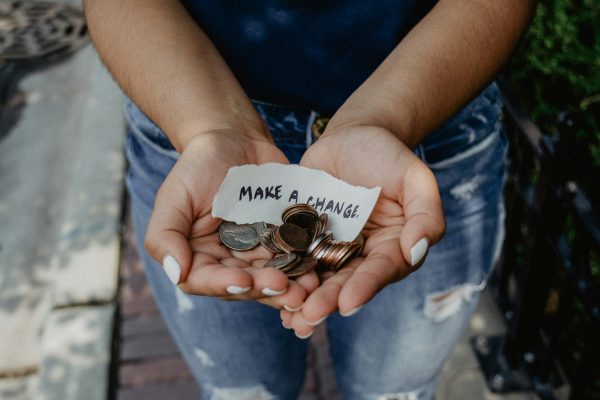
Photo by Katt Yukawa on Unsplash
Last updated May 3, 2025. These terms govern all In Sight Publishing content—past, present, and future—and supersede any prior notices. In Sight Publishing by Scott Douglas Jacobsen is licensed under a Creative Commons BY‑NC‑ND 4.0; © In Sight Publishing by Scott Douglas Jacobsen 2012–Present. All trademarks, performances, databases & branding are owned by their rights holders; no use without permission. Unauthorized copying, modification, framing or public communication is prohibited. External links are not endorsed. Cookies & tracking require consent, and data processing complies with PIPEDA & GDPR; no data from children < 13 (COPPA). Content meets WCAG 2.1 AA under the Accessible Canada Act & is preserved in open archival formats with backups. Excerpts & links require full credit & hyperlink; limited quoting under fair-dealing & fair-use. All content is informational; no liability for errors or omissions: Feedback welcome, and verified errors corrected promptly. For permissions or DMCA notices, email: scott.jacobsen2025@gmail.com. Site use is governed by BC laws; content is “as‑is,” liability limited, users indemnify us; moral, performers’ & database sui generis rights reserved.
 Rick Rosner