From halftime shows and celebrity parties to measles outbreaks, the Epstein files, and transatlantic trust, what do these flashpoints reveal about American culture and governance right now?
Scott Douglas Jacobsen and Rick Rosner range from Super Bowl culture to institutional trust. Rosner argues the halftime show’s language mattered less than spectacle, mocks the “alternate” Kid Rock event, and reflects on the social psychology of parties, fame, and disappointment. He pivots to travel and identity—Italy, England, and even hair as biology and branding—then turns sharply to politics: Maxwell and Epstein disclosures, federal leverage against blue states, vaccine misinformation fueling measles resurgence, and weakened confidence in U.S. steadiness abroad. The throughline is cynicism about performative controversy and the real costs of misinformation and instability.
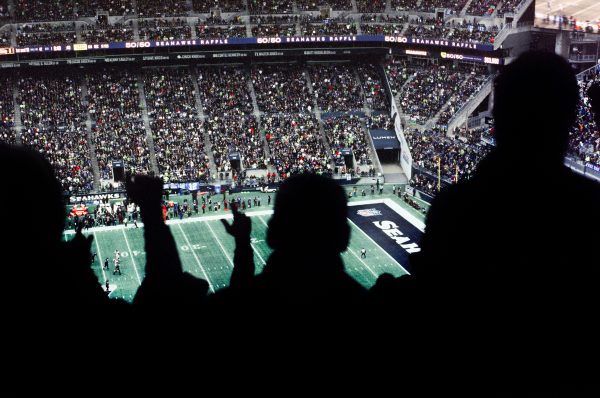
Rick Rosner: I watched the Super Bowl halftime show with Bad Bunny. It was fine. His entire performance was in Spanish. That did not matter because the production values carried it. They brought in Lady Gaga for a while. Overall, it was fine.
Scott Douglas Jacobsen: Was everything that Lady Gaga sang in English, Portuguese, or Spanish?
Rosner: She sang in English, but a lot was going on, and I did not catch many of her words either. It was fine. It was much better than the Super Bowl shows of my youth, such as Up with People. Expectations were different then.
Turning Point USA—Charlie Kirk’s organization—ran an alternate halftime show with Kid Rock. The official Super Bowl halftime show drew more than 135 million viewers. Kid Rock’s event drew several million streaming viewers, reported in the mid–single-digit millions. He lip-synced. The sound quality was poor, and the production quality was bad. Let them have their alternate halftime show. It was dumb.
Jacobsen: Overall, it is good for advertisers. A little fake controversy helps.
Rosner: I do not know. It is all dumb. More important things are happening—real political issues, such as the jobs market.
Jacobsen: Super Bowl Sunday has always been a distraction.
Rosner: Yes.
Jacobsen: It has always been an attempt at that.
Rosner: The Super Bowl itself is usually disappointing. This was not a good game. At halftime, Seattle led New England 9–0, and Seattle went on to win 29–13. A good game needs back-and-forth scoring. There was strong defensive play, but very little momentum shift. Super Bowls are usually disappointing.
I have been to Super Bowl parties. The food is supposed to be the best party food of the year. It usually is not. I have been to several parties. One had terrible food, and my team was badly beaten. That was one of the times Denver was in the Super Bowl. I went to a party in Denver where the people were unpleasant.
I used to attend celebrity Super Bowl parties when I worked for Kimmel. Those parties were good, but stressful, because you did not want to embarrass yourself around famous people. I went from a party where Jon Hamm might be present to a party with regular people. The conversation was bad, the food was bad, and my team lost badly. I have not been to a Super Bowl party since. I no longer attend the Super Bowl parties of famous people.
Jacobsen: If you had to leave the United States in peacetime, where would you go for a vacation, and where would you want to live permanently?
Rosner: Italy would be my first choice. Carole and I have been there twice. Italy is excellent and relatively affordable. If I were younger, I would buy one of those inexpensive houses in a small town, renovate it, get overcharged by local contractors, and end up with a small villa. That would be worth it.
Otherwise, England. Our child is there, and her in-laws are there. It is a great country. The winter weather is bad, but you adapt. Housing in London is expensive, but food is relatively affordable. I like England.
I could learn to like most countries in the EU. They are close enough that we could see our child more often than we do now. That is the answer.
Jacobsen: Would you rather have jet-black hair, straight gray hair, or a full head of white hair?
Rosner: I want Sam Elliott’s hair. He is a famous Western actor. Everyone knows him. He went gray relatively early, probably in his twenties, and is now in his eighties and still has a full head of hair. That is what I want. I want the kind of hair that turns gray early, which often means you keep it.
Jacobsen: So he pulled a Steve Martin, biologically speaking?
Rosner: No. Steve Martin is hair-challenged. He likely enhances it cosmetically. I want Steve Martin’s colour outcome, but not his hair loss pattern.
Jacobsen: What subject did you do the worst in during high school?
Rosner: I did badly in several subjects because I fell apart academically. I really liked American Studies, which combined English and history for double credit. I liked the course and the teachers, but I did not do the work.
We had to write long-term papers. I was supposed to write one on Thomas Moran, a nineteenth-century American painter associated with western landscape art—artists who travelled with explorers and painted places like Yellowstone, Yosemite, and the Tetons. Moran was one of them. I did a lot of research, but couldn’t pull the paper together. I failed the course. I failed it twice, which meant four Fs.
In my defence, I went out for wrestling. I developed severe hemorrhoids and had surgery. I was on Percocet or Percodan afterward. My focus, which was never great, was much worse while I was medicated. That is the explanation.
Jacobsen: Ghislaine Maxwell was questioned by a House committee and invoked the Fifth Amendment, declining to answer questions that might incriminate her. Any thoughts?
Rosner: Yes. It looks like a setup. She was willing to speak with Trump’s attorney, Todd Blanche, who asked her softball questions. In return, she was transferred from a harsher prison facility to a lower-security one. Blanche is now working at the Department of Justice, which is supposedly responsible for prosecuting Epstein-related crimes.
No one is being prosecuted. Millions of documents remain heavily redacted. Congressman Thomas Massie, a Republican who has become increasingly critical of Trump, has said that if the names remain hidden, he will release them himself. We will see what happens. But if anyone expects the Trump Justice Department to bring real accountability, they will be disappointed.
Jacobsen: New York City has built major court infrastructure around a ruling that required the Transportation Department to unfreeze federal funding for the $16 billion Hudson Tunnel project. The Trump administration has appealed that ruling. Any thoughts?
Rosner: Trump is withholding funds from New York. He dislikes New York because it is a blue city in a blue state. New York State is technically purple, but his hostility is obvious.
He has a pattern of weaponizing federal funding. He has suggested, in other contexts, that funding could be provided in exchange for symbolic loyalty gestures, such as renaming infrastructure. Dulles Airport, for example, is outside Washington, D.C., in Virginia. Trump has floated renaming it after himself as part of a funding discussion.
He is extraordinarily petty. Whether it is FEMA aid or infrastructure funding that has already been allocated, he treats it as leverage—rewarding red states and punishing blue ones.
Jacobsen: The measles warning in the United States has gone mainstream. Dr. Mehmet Oz has urged vaccinations, saying, “Take the vaccine, please,” as outbreaks have expanded and multiple states have reported cases this year. What are your thoughts on the rise of serious and potentially lethal diseases spreading state by state?
Rosner: In previous decades, measles was effectively eliminated in the United States. As long as vaccination rates stayed high—around 95 percent—it could not reestablish itself. Measles is extremely contagious, so it requires higher herd immunity than many other diseases, where lower coverage might still work.
Then the anti-vaccine movement gained traction, promoting skepticism. As vaccination rates declined, particularly in some tight-knit religious communities, outbreaks began to reappear. Those outbreaks do not remain contained; they spill into the broader population.
We have seen high-profile exposure events, including recent cases linked to major tourist destinations. Public-health officials cannot realistically trace or quarantine every exposure in those situations.
Dr. Oz appeared on a Sunday news program encouraging vaccination. He also claimed that Robert F. Kennedy Jr. has never told people not to vaccinate, a point that the host challenged. At least there was some pushback.
The reality is that vaccine skepticism promoted by political figures and media personalities has consequences. The United States recorded more than two thousand measles cases last year, and current trends suggest that number could be exceeded. Measles can be fatal, but even when it is not, it can suppress the immune system for years, increasing vulnerability to other infections.
This situation is driven by misinformation and alternative-health grifting. Many of the same figures who oppose vaccines profit from selling supplements and “natural” remedies that offer no real protection. It is a serious public-health failure.
Jacobsen: Turning to the Department of Justice, Congress, and the Epstein files: the Justice Department has said it will allow lawmakers to view unredacted Epstein materials while the Maxwell deposition continues. What do you make of that? Is it good or bad?
Rosner: Those names remain redacted. Some foreign figures have been identified, which has already caused political fallout abroad, including renewed scrutiny of Prince Andrew in the United Kingdom.
Many wealthy and powerful American figures remain hidden. Congressman Thomas Massie, a Republican, has said that if the government does not release those names, he will. Many people are watching closely to see whether that happens.
Will there be consequences? I am skeptical.
There are two layers of suppression. Millions of documents exist. Roughly three million have been released, many heavily redacted. Another large tranche is being withheld entirely, with vague explanations. It is reasonable to assume that the unreleased material contains more damaging information, including material related to Trump.
We can also look at job data. A partial government shutdown delayed the January employment report, but preliminary figures indicate roughly 22,000 jobs were added. That is far below historical norms.
From 2011 through 2019, the U.S. averaged nearly 3 million jobs added per year. Job growth slowed sharply after new tariffs were introduced, and that slowdown appears to have continued through January.
Despite optimistic messaging from administration spokespeople, job creation has weakened significantly. The numbers do not support claims that the economy is performing well.
Jacobsen: One more, based on what you were saying. Secretary of State Marco Rubio is leading a large U.S. delegation to Munich for the Munich Security Conference. Reuters reports that the goal is to project steadier transatlantic ties amid visible frictions. That seems like a euphemism. What are your thoughts?
Rosner: You cannot credibly project steadiness from the United States with Trump as president. With Republican majorities in the House and Senate, there are few internal checks, and they largely follow Trump’s lead. Trump is unpredictable and, at this point, not viewed internationally as a reliable partner.
That is unlikely to change before the midterm elections. If Democrats regain control of the House, that could introduce some institutional constraint, but until then, the rest of the world has little reason to trust U.S. commitments.
Confidence matters. When trust in U.S. governance declines, international investors become more cautious. That can mean reduced demand for U.S. Treasury bonds or higher interest rates required to attract buyers. Higher borrowing costs increase the cost of servicing the national debt, putting additional strain on the economy.
Until there is clearer political stability or credible limits on presidential power, allies will hedge, markets will price in risk, and diplomatic reassurance tours will have limited effect.
Jacobsen: Thank you very much for the opportunity and your time, Rick.
Rick Rosner is an accomplished television writer with credits on shows like Jimmy Kimmel Live!, Crank Yankers, and The Man Show. Over his career, he has earned multiple Writers Guild Award nominations—winning one—and an Emmy nomination. Rosner holds a broad academic background, graduating with the equivalent of eight majors. Based in Los Angeles, he continues to write and develop ideas while spending time with his wife, daughter, and two dogs.
Scott Douglas Jacobsen is the publisher of In-Sight Publishing (ISBN: 978-1-0692343) and Editor-in-Chief of In-Sight: Interviews (ISSN: 2369-6885). He writes for The Good Men Project, International Policy Digest (ISSN: 2332–9416), The Humanist (Print: ISSN 0018-7399; Online: ISSN 2163-3576), Basic Income Earth Network (UK Registered Charity 1177066), A Further Inquiry, and other media. He is a member in good standing of numerous media organizations.
Photo by Caleb Woods on Unsplash
Last updated May 3, 2025. These terms govern all In Sight Publishing content—past, present, and future—and supersede any prior notices. In Sight Publishing by Scott Douglas Jacobsen is licensed under a Creative Commons BY‑NC‑ND 4.0; © In Sight Publishing by Scott Douglas Jacobsen 2012–Present. All trademarks, performances, databases & branding are owned by their rights holders; no use without permission. Unauthorized copying, modification, framing or public communication is prohibited. External links are not endorsed. Cookies & tracking require consent, and data processing complies with PIPEDA & GDPR; no data from children < 13 (COPPA). Content meets WCAG 2.1 AA under the Accessible Canada Act & is preserved in open archival formats with backups. Excerpts & links require full credit & hyperlink; limited quoting under fair-dealing & fair-use. All content is informational; no liability for errors or omissions: Feedback welcome, and verified errors corrected promptly. For permissions or DMCA notices, email: scott.jacobsen2025@gmail.com. Site use is governed by BC laws; content is “as‑is,” liability limited, users indemnify us; moral, performers’ & database sui generis rights reserved.
 Rick Rosner