How do minority support, institutional erosion, and media dynamics enable Trump’s boundary-testing style of politics?
Scott Douglas Jacobsen interviews Rick Rosner on why liberals view Donald Trump as boundary-testing and institution-hostile. Rosner cites expert presidential rankings placing Trump near the bottom and argues that reputational damage abroad raises borrowing costs and weakens U.S. influence as China expands Belt and Road. He frames Trump as authoritarian-populist: constantly visible, powered by a loyal minority base, and reliant on in-group versus out-group moral narratives. Rosner links Trump’s anti-institutional posture to transactional loyalty, vengeance, and personnel choices that privilege allegiance over process. He also describes Overton-window shifts and tech-elite amplification that corrodes press effectiveness. It highlights risks to democracy.
Zero Sum Politics
Scott Douglas Jacobsen: I will set you up. Why do liberals see Trump as someone who stretches presidential authority and tests constitutional boundaries through zero-sum politics?
Rick Rosner: Because he does. He is more corrupt, more aggressive, and less competent than any previous president. He has less political knowledge and less respect for institutional protocol. He is meaner, and I consider him the worst president in U.S. history.
Every few years, scholars and historians evaluate presidents in expert surveys. In several recent expert rankings, Trump is placed at or near the bottom. In the Presidential Greatness Project surveys, he ranked last in both 2018 and 2024. In C-SPAN’s 2021 survey of presidential historians, he ranked 41st out of 44, which is still among the lowest. In Siena College’s 2022 expert survey, he ranked 43rd out of 45. One does not need to be a partisan activist to conclude that he was a very bad president.
He damaged America’s standing in the world. That damage can sometimes be reversed. After George W. Bush weakened U.S. credibility, Obama restored much of it. Trump’s damage is more lasting because he demonstrated how quickly the United States can deteriorate with a single change in leadership.
After Trump, rebuilding trust will produce diminishing returns. Trust is necessary to sell U.S. debt—Treasury bonds that finance federal borrowing. If other countries do not trust the United States, higher interest rates are required, which increases the cost of servicing debt. This is inflationary and reduces domestic fiscal capacity.
As the United States withdraws from global engagement, China fills gaps through the Belt and Road Initiative—an international infrastructure and development program. The name is incidental; the function is clear. The United States once played a comparable role and benefited strategically. Trump abandoned that posture, weakening U.S. global influence.
Authoritarian Populism as Praxis
Jacobsen: What about the characterization of Trump as practicing authoritarian populism?
Rosner: Trump maintains constant public visibility. He speaks to the press frequently, often daily, including informal exchanges aboard Air Force One. He makes many false and offensive statements, but constant engagement benefits him politically.
By contrast, Biden was far less publicly accessible to the press, which harmed Democrats. Trump is authoritarian and seeks maximum power, but he is also populist in style because he is accessible. He prefers direct exposure and unrestricted speech.
‘We the People’ as Us Vs. Them
Jacobsen: What about the inner-circle versus outer-circle framing—us, “the people,” MAGA, versus enemies such as liberals, Democrats, secular humanists, Muslims, and others? How does that moral framing help him?
Rosner: He does not have majority support, and he never has. Since announcing his candidacy in 2015, he has spent the vast majority of his political career below 50 percent approval. At most points, his approval has been in the low 40s, while disapproval has been in the mid-50s. That pattern has been consistent.
Despite that, he still has enough support to function politically. A solid minority base is sufficient to raise tens of millions of dollars in campaign contributions and to sustain his political relevance. For him, MAGA is enough. Even though most Americans disapprove of him, his minority support provides the political and financial resources he needs.
Many observers hope that his support continues to erode—dropping from the low 40s into the high 30s—at which point Republican members of Congress may begin to distance themselves. That outcome is possible but uncertain.
Republicans currently hold a very narrow majority in the House. With margins this slim, even small shifts—such as special elections or party defections—can change control. Historically, the president’s party often loses seats in midterm elections, and most forecasts expect Republicans to face significant losses, making a loss of the House likely.
Geopolitical Continentalism
Jacobsen: What about the geopolitical framing—an authoritarian populist emphasis on continentalism—where he focuses primarily on North America while pulling back from other regions of the world?
Rosner: He can claim that frame, but his actions undermine it. He has unnecessarily antagonized Canada through tariffs, hostile rhetoric, and even joking references to annexation. He has also strained relations with Mexico. Continentalism makes little sense when North America consists of only three countries, two of which are at odds with each other.
There are legitimate issues with Mexico, particularly involving cartel violence and cross-border crime. None of that applies to Canada. However, Canada has been subjected to unjustified tariffs and political hostility.
Those tariffs have economic consequences. Tariffs on Canadian auto parts have raised costs for manufacturers, contributing to higher car prices in the United States. That harms both American consumers and Canadian producers. It does not advance U.S. interests and contradicts any serious notion of continental cooperation.
Anti-Institutionalism
Jacobsen: He is anti-institutionalist. That includes the Constitution as an institution, treaties, conventions, UN bodies and agencies, international organizations, NGOs, INGOs, and civil-society organizations—many of which he seeks to defund, weaken, or bypass. He is hostile to institutions. I see a kind of negation or substitute affirmation in things like the proposed “Board of Peace.” How does that fit into his vision of the world?
Rosner: He has said that if elected to a second term, his political purpose would be vengeance. His instinct is to break, defy, or undermine structures he resents. He is not interested in governance as such. He is interested in personal enrichment and personal power.
People describe him as “transactional,” which is a polite way of saying he prioritizes those who materially benefit him. He rewards loyalty that brings financial or political advantage. Institutions that do not serve that purpose, or that constrain him, are targets for attack or dismantling.
Media or the Press
Jacobsen: What about his approach to the press?
Rosner: He does not care about institutional legitimacy or broad approval. He gets what he needs from those aligned with him and largely disregards everyone else. He speaks impulsively and without restraint. He may occasionally praise or flatter individuals, but it is situational and instrumental.
Because his base remains loyal, criticism from the press has little effect on him. He does not value journalism as an institution. He only pays attention to media coverage insofar as it provides immediate personal advantage.
Jacobsen: What about his focus on personnel choices and enforcement priorities—where loyalty to him matters more than process or norms?
Rosner: He values people and actions that serve his personal objectives—more money, more power, and retaliation against perceived enemies. Process, institutional continuity, and rule-based governance are secondary or irrelevant.
The Overton Window
Jacobsen: What about the shifting of the Overton window?
Rosner: The Overton window defines the range of ideas considered acceptable in public debate—the arguments that can be made on social media, on television, and in mainstream discourse without immediate exclusion. Political actors on the far right actively work to shift that window so that increasingly extreme positions appear normal or debatable.
One example involves debates over what Olympic athletes may say publicly. American athletes are now routinely asked political questions in press conferences before and after events. Some express support for the country while criticizing specific policies or conditions. That has generated debate over what is acceptable speech for athletes.
In the historical context, this is not new. At the 1968 Mexico City Olympics, two American medalists raised Black Power salutes on the podium. That act shocked many Americans at the time. More than five decades later, political expression by athletes still provokes controversy, but the debate itself is now firmly within mainstream discourse.
It is now considered acceptable for television commentators to argue that athletes who make political statements should face consequences, including removal from competition. Pundits can make those arguments on major networks without professional sanction. That illustrates where the Overton window currently sits: it marks what one can say on national television without losing credibility or employment.
Some figures on the right attempt to push the window further—toward historical revisionism—by arguing that although Hitler was evil, some of his ideas were defensible. That position is still largely outside the Overton window and provokes widespread condemnation. However, the fact that such arguments appear at all, particularly on social media, indicates some movement.
In online spaces, including large influencer-driven accounts, individuals have made statements sympathetic to extremist or authoritarian ideas without facing total social or professional exclusion. That suggests a partial normalization of rhetoric that would once have been unthinkable in mainstream discourse.
The Ultra-Wealthy and Dominant Technologists
Jacobsen: What about the alignment with ultra-wealthy actors and dominant technology firms in weakening press freedom or press effectiveness?
Rosner: Wealthy technology executives have shown a growing willingness to align themselves with Trump or to accommodate his political movement. Several prominent tech leaders have appeared publicly with him or shifted their posture toward cooperation rather than opposition.
Jeff Bezos owns The Washington Post. In recent years, the paper has undergone substantial newsroom reductions through buyouts and restructuring, along with leadership turnover at the editorial level. While it is inaccurate to say that a third of the newsroom was fired, the reductions have been significant enough to raise serious concerns about the paper’s long-term capacity for investigative journalism. The Washington Post, historically central to the Watergate investigation and to American accountability journalism, is now a diminished institution compared with its former strength.
Other technology figures, such as Peter Thiel, have openly supported Trump-aligned candidates and political projects. Thiel has backed J.D. Vance and other figures associated with a more explicitly illiberal and authoritarian political vision. These actors are highly self-interested, possess immense financial and cultural power, and play a role in reshaping the political ecosystem.
Elon Musk owns X, formerly Twitter. Since acquiring the platform, Musk has loosened moderation policies, reinstated previously banned accounts, and allowed the return of extremist, conspiratorial, and anti-vaccine content. That has altered the tone and reach of political discourse on the platform, making it more hospitable to far-right narratives. This has had measurable effects on how political ideas circulate and normalize.
Taken together, these developments have helped shift the boundaries of acceptable public debate. They have not created Trumpism, but they have amplified it, reduced institutional resistance to it, and weakened the informational environment that once constrained it.
Jacobsen: Thank you very much for the opportunity and your time, Rick.
Rick Rosner is an accomplished television writer with credits on shows like Jimmy Kimmel Live!, Crank Yankers, and The Man Show. Over his career, he has earned multiple Writers Guild Award nominations—winning one—and an Emmy nomination. Rosner holds a broad academic background, graduating with the equivalent of eight majors. Based in Los Angeles, he continues to write and develop ideas while spending time with his wife, daughter, and two dogs.
Scott Douglas Jacobsen is the publisher of In-Sight Publishing (ISBN: 978-1-0692343) and Editor-in-Chief of In-Sight: Interviews (ISSN: 2369-6885). He writes for The Good Men Project, International Policy Digest (ISSN: 2332–9416), The Humanist (Print: ISSN 0018-7399; Online: ISSN 2163-3576), Basic Income Earth Network (UK Registered Charity 1177066), A Further Inquiry, and other media. He is a member in good standing of numerous media organizations.
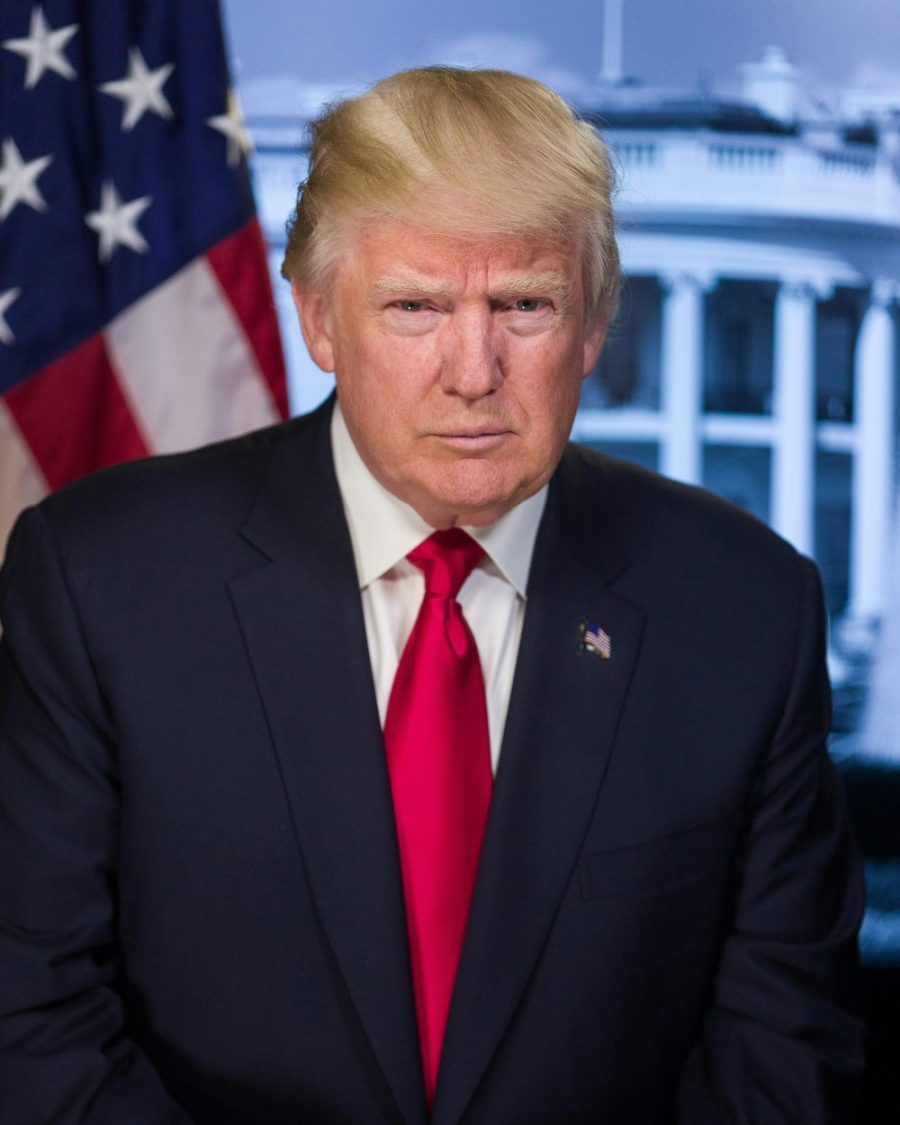
Photo by Library of Congress on Unsplash
Last updated May 3, 2025. These terms govern all In Sight Publishing content—past, present, and future—and supersede any prior notices. In Sight Publishing by Scott Douglas Jacobsen is licensed under a Creative Commons BY‑NC‑ND 4.0; © In Sight Publishing by Scott Douglas Jacobsen 2012–Present. All trademarks, performances, databases & branding are owned by their rights holders; no use without permission. Unauthorized copying, modification, framing or public communication is prohibited. External links are not endorsed. Cookies & tracking require consent, and data processing complies with PIPEDA & GDPR; no data from children < 13 (COPPA). Content meets WCAG 2.1 AA under the Accessible Canada Act & is preserved in open archival formats with backups. Excerpts & links require full credit & hyperlink; limited quoting under fair-dealing & fair-use. All content is informational; no liability for errors or omissions: Feedback welcome, and verified errors corrected promptly. For permissions or DMCA notices, email: scott.jacobsen2025@gmail.com. Site use is governed by BC laws; content is “as‑is,” liability limited, users indemnify us; moral, performers’ & database sui generis rights reserved.
 Rick Rosner