How do dogs and other animals balance excretion and territory-marking, and why did evolution separate liquid and solid waste in mammals?
In this exchange, Rick Rosner uses his half–West Highland Terrier, Brita, to illustrate how temperament shapes house-training: terriers can be stubborn, sometimes requiring treats and prompting to prevent indoor accidents. Scott Douglas Jacobsen pushes the discussion from pet behaviour into comparative biology, asking how urination differs across species and why mammals separate liquid and solid waste. Rosner contrasts human excretion with animal territorial marking, then detours into zoological oddities: wombats stack cube-shaped feces for signalling, koalas face regionally variable chlamydia burdens, and kangaroos can grapple and kick in “boxing” bouts.
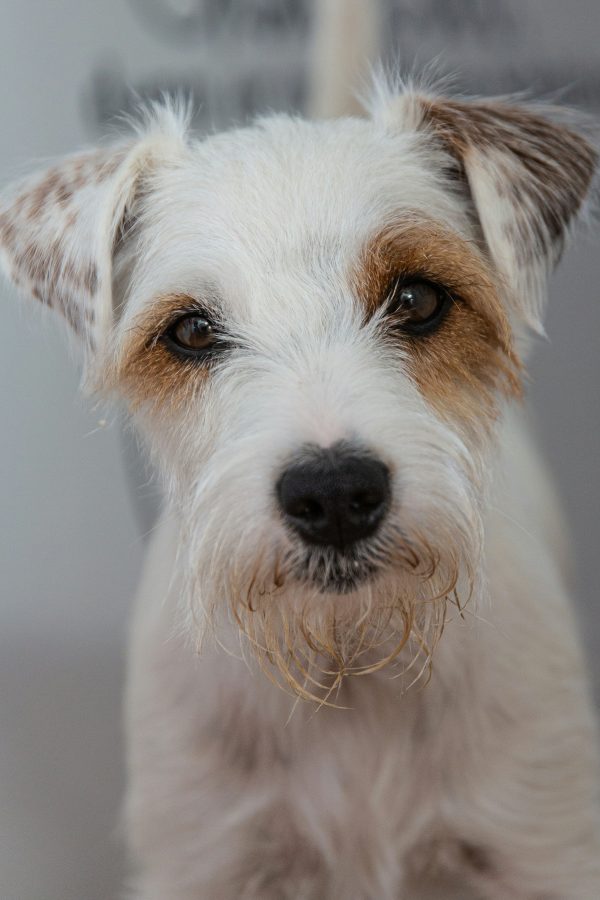
Rick Rosner: Our current dog, Brita, is half West Highland Terrier. What is the other half? Terriers tend to follow their own counsel. Our previous dog, Rosie, was fine.
If you did not let her out, she might poop in the house, but given the opportunity, she would go outside. Our previous dog, Meg, just wanted to do what we wanted her to do. She was a very nice dog. Brita is a nice dog, too, but terriers are stubborn. We have to take her out and urge her to pee for a treat. Otherwise, there is a 5% chance she will pee in the house out of laziness. You have been to our house—you know the carpet is pee-stained. I do not think it smells because we cleaned it, but the carpet is not in the best shape.
Scott Douglas Jacobsen: Do the patterns differ among humans, animals, dogs, and that sort of thing?
Rosner: What do you mean?
Jacobsen: For them, it can be marking territory as well as excretion. For us, it is primarily excretion.
Rosner: Every animal has its own stance, attitudes, and conditions around getting rid of pee and poop. Wombats make cube-shaped poops. They use them for communication—marking territory and attracting mates—and the cube shape helps the droppings stack and stay put on surfaces like rocks or logs, rather than rolling away. The shape is thought to come from how their intestines move and compress drying material, not from the sphincter “moulding” it.
Wombats are adorable if you have seen them. Adult wombats are roughly around a metre long (often under that) and commonly weigh a few dozen kilograms, depending on the species. Also, what keeps growing throughout their lives is their teeth, not the entire wombat. Australia has some of the cutest-looking animals.
Koalas are pretty cute, but they do not do much. They mostly eat eucalyptus and rest. Chlamydia is a major health problem for koalas in many regions—it can cause infertility and eye disease—but it is not accurate to say they all have it; infection rates vary a lot by location.
Kangaroos are adorable, but you do not want to get too close to them. They can grapple with their forearms and deliver powerful kicks while balancing on their tails. People call it “boxing,” and it can definitely injure someone. Everybody has different peeing and pooping behaviours.
Jacobsen: Why do you think evolution produced a system where there is a separation between liquid and solid? Why is it not just one sludge?
Rosner: Birds are a good counterexample: many of them excrete uric acid and feces together through a single opening (a cloaca). In mammals, running liquids through the body and excreting them is an efficient way to remove certain wastes. Solid waste is different, and it takes different machinery.
Also, poop is not “95% bacteria.” Bacteria are a major component—especially of the dry mass—but they are not anywhere near all of it.
Jacobsen: Do other animals have as many bacteria?
Rosner: I do not know.
Rick Rosner is an accomplished television writer with credits on shows like Jimmy Kimmel Live!, Crank Yankers, and The Man Show. Over his career, he has earned multiple Writers Guild Award nominations—winning one—and an Emmy nomination. Rosner holds a broad academic background, graduating with the equivalent of eight majors. Based in Los Angeles, he continues to write and develop ideas while spending time with his wife, daughter, and two dogs.
Scott Douglas Jacobsen is the publisher of In-Sight Publishing (ISBN: 978-1-0692343) and Editor-in-Chief of In-Sight: Interviews (ISSN: 2369-6885). He writes for The Good Men Project, International Policy Digest (ISSN: 2332–9416), The Humanist (Print: ISSN 0018-7399; Online: ISSN 2163-3576), Basic Income Earth Network (UK Registered Charity 1177066), A Further Inquiry, and other media. He is a member in good standing of numerous media organizations.
Photo by Lena Balk on Unsplash
Last updated May 3, 2025. These terms govern all In Sight Publishing content—past, present, and future—and supersede any prior notices. In Sight Publishing by Scott Douglas Jacobsen is licensed under a Creative Commons BY‑NC‑ND 4.0; © In Sight Publishing by Scott Douglas Jacobsen 2012–Present. All trademarks, performances, databases & branding are owned by their rights holders; no use without permission. Unauthorized copying, modification, framing or public communication is prohibited. External links are not endorsed. Cookies & tracking require consent, and data processing complies with PIPEDA & GDPR; no data from children < 13 (COPPA). Content meets WCAG 2.1 AA under the Accessible Canada Act & is preserved in open archival formats with backups. Excerpts & links require full credit & hyperlink; limited quoting under fair-dealing & fair-use. All content is informational; no liability for errors or omissions: Feedback welcome, and verified errors corrected promptly. For permissions or DMCA notices, email: scott.jacobsen2025@gmail.com. Site use is governed by BC laws; content is “as‑is,” liability limited, users indemnify us; moral, performers’ & database sui generis rights reserved.
 Rick Rosner