What constitutes a true “phase change” in human evolution, and are smartphones, AI integration, and longevity science pushing us toward another one?
In this wide-ranging dialogue, Scott Douglas Jacobsen and Rick Rosner examine technological and evolutionary “phase changes” in human history—from language and agriculture to smartphones and neural interfaces. Jacobsen argues that 2007–2008 marked a behavioural transformation comparable, in speed if not scale, to earlier civilizational shifts. They explore the Flynn effect’s slowdown, augmented sports, wearable and implanted technologies, and the limits of AI embodiment. The conversation extends to wartime sleep disruption in Ukraine, longevity escape velocity, and sexual reproduction as evolution’s “inefficient” engine. Throughout, both probe what may remain uniquely human in an increasingly technologized world.
Rick Rosner: I want to discuss humanity’s phase changes. The concept comes from physics. There are quantitative changes, such as hot water and cold water, which are still water but behave as liquids. A phase change occurs when water reaches a specific temperature and changes state from liquid to gas or from liquid to solid. It is a qualitative change rather than merely a quantitative one.
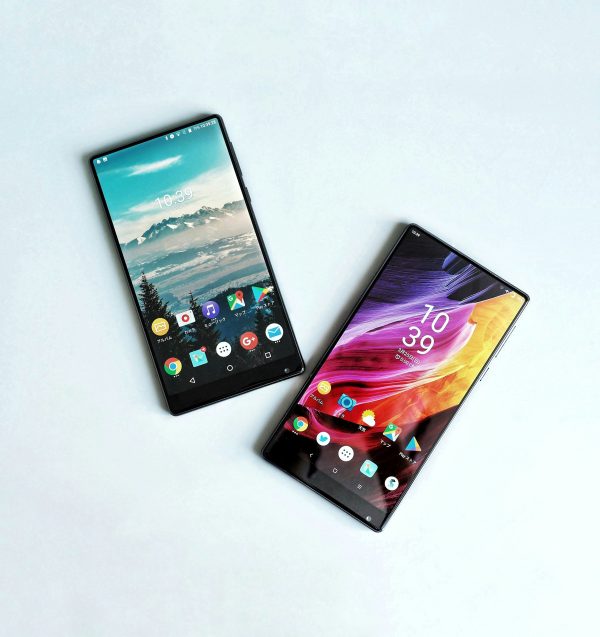
I would argue that 2007–2008 marked a phase change in human behaviour. We moved from basic mobile phones—when using a phone in public was widely seen as rude—to a world in which smartphones became rapidly widespread and socially normalized. Today, billions of people use smartphones, and there are more smartphones in circulation than there are individual users. Most people with smartphones use them frequently throughout the day. We have also discussed the Flynn effect and its slowdown or reversal in some places: IQ test scores rose across much of the 20th century, often summarized as roughly 3 IQ points per decade in several countries, but recent research shows stagnation or declines in some cohorts and countries. That does not mean IQ is falling everywhere, but it does mean the earlier upward trend is no longer universal. It is plausible that changing environments—such as education, reading habits, screen time, and other factors—play a role, but causal claims should be made cautiously.
Human behaviour has changed in other measurable ways as well. In several high-income countries, younger cohorts report lower rates of drinking compared with earlier generations, and some surveys also show declines in sexual frequency among young adults. These trends vary by country, methodology, and time period, so they are suggestive rather than universal.
Other human phase changes took far longer than the smartphone shift. The emergence of language was a phase change. It made communication vastly more efficient and allowed humans to compress experience into symbolic units—words—that could be recombined and shared. The timeline for language is uncertain, but it likely unfolded over a much longer span than a decade of consumer technology adoption.
Walking upright also represented a major transition. Bipedalism in the hominin lineage began millions of years ago, and substantial increases in brain size occurred later. Dexterous hands alone do not guarantee technological intelligence. Many animals can manipulate objects effectively without developing cumulative, complex technology.
In the science fiction story Bears Discover Fire, bears develop fire-making technology and gather around campfires. In reality, dexterity alone does not produce technological civilization.
Another phase change occurred when humans shifted from largely nomadic lifeways to more settled communities and agriculture. That transformation altered social organization, economies, and culture.
A further shift involved the normalization of face-to-face sexual behaviour. Most mammals copulate from behind. Humans commonly engage in face-to-face sexual behaviour. I do not know all the associated evolutionary changes linked to that shift. It may be related to pelvic structure and habitual bipedalism. It may also influence pair bonding, because partners face one another during intercourse.
Humans evolved with permanently enlarged breasts. One hypothesis suggests that breasts function as a secondary sexual characteristic that may have replaced the visual signalling role of buttocks in rear-entry mating species. That remains a debated evolutionary explanation rather than a settled fact.
Another phase change could be the development of printed language. Before the printing press, literacy was limited to a small minority. Johannes Gutenberg’s movable-type press emerged in mid-15th-century Europe. Over the following centuries, literacy rates increased substantially as printed materials became cheaper and more widely available. The dissemination of information accelerated, contributing to major social transformations.
The reduction of human body hair may also reflect environmental change. Early hominins moved from forested environments into more open savanna habitats. In hot climates, endurance activity in direct sunlight favours thermoregulation. Reduced body hair, combined with increased sweating capacity, likely helped prevent overheating during persistence hunting and long-distance travel.
Future phase changes may occur rapidly. Wearable technologies, augmented-reality glasses, and implanted devices could become widespread if they prove practical and beneficial. Currently, implanted medical devices are relatively rare but significant. Pacemakers are used by a small percentage of adults, particularly older individuals. Cochlear implants restore partial hearing to some deaf patients. Deep brain stimulation is used in certain cases of Parkinson’s disease to reduce motor symptoms such as freezing and tremors.
Linked digital systems may increasingly approximate forms of mediated “telepathy,” enabling faster, more seamless information sharing. For most of human and animal history, direct mind-to-mind communication has not existed. Advanced interfaces could move us closer to real-time shared data streams, though not literal telepathy.
Scott Douglas Jacobsen: Any technology that duplicates something the body already does efficiently may not make sense to develop. If reverse engineering a biological function is extremely costly and yields minimal benefit, the opportunity cost may outweigh the gain.
Rosner: If we imagine a world 200 years from now in which people can transition between biological embodiment and immersive virtual environments, or preserve aspects of consciousness digitally, there will still be a preference for living in a biological body. There will be ritual and cultural significance attached to remaining in the body one was born with.
In sports, there would likely be multiple leagues. Some competitions allow augmentation, while others preserve unmodified human performance. Even if enhancement offered major advantages, certain cultures would emphasize remaining biologically unaltered. There would likely be communities that deliberately minimize technological integration—analogous to contemporary groups that limit modern technology.
You are asking what human capacities might continue to exceed augmented systems. Sensory experience may be one area. Technologies can simulate pleasure, and pharmacology can alter mood, but such methods often involve trade-offs and health risks. Sexual intimacy remains one of the most accessible and comparatively low-risk sources of intense pleasure, and it may retain that role even in highly technologized societies.
Aesthetics may also preserve a preference for natural human appearance. Humanoid robots often fall into what robotics researchers call the “uncanny valley,” a term introduced by Masahiro Mori in 1970. As artificial figures become more human-like, they can evoke discomfort if they are almost—but not fully—realistic. Animated films such as The Polar Express are frequently cited as early examples of this effect. As humanoid robots become more common, acceptance may increase, but social adaptation will likely take time.
Artificial companions may become more widespread, though initial adoption could be limited or stigmatized. Over time, normalization could occur, but matching the subtle cues and embodied presence of human interaction remains technically and socially complex.
Jacobsen: What about the economic dimension? How will speech and listening change? Spoken language may increasingly be mediated by real-time translation, transcription, and augmentation tools. However, embodied conversation—tone, facial expressions, shared physical context—still carries information that is difficult to replicate fully. Even if technology enhances communication efficiency, the biological human system for speech and listening may remain central because it evolved to process nuance, rhythm, and social signalling in ways that are deeply integrated with our cognition.
Rosner: You mentioned another dimension: it may take a long time for technology-mediated telepathy to rival simply speaking to one another. Sharing thoughts directly through neural interfaces would likely be clumsy for a long time. I have been married to Carol for nearly 35 years. Some couples in the future may express intimacy by linking consciousness through neural technology. Even so, it may take decades before that feels as natural or effective as long-term familiarity and conversation. How often are you awakened during the night?
Jacobsen: There are stretches where you are awake for several hours and then manage only a short period of sleep. It is stressful. There is a curfew from midnight to 5 in the morning, when bombardments often occur. You remain indoors or go to a shelter. The timing appears designed to disrupt sleep. There have been no bombardments for several days, which is concerning because it may signal preparations for something larger. Many incoming missiles are intercepted. Air defence systems, including the Patriot, are effective, though missile supplies are limited.
Rosner: I read that Ukraine regained approximately 78 square miles over the past five days.
Jacobsen: Part of that may relate to changes in communication channels. If operational messaging shifts from rapid Telegram coordination to slower alternatives, that can create temporary vulnerabilities. In addition, connectivity disruptions—such as satellite internet access being restricted on one side—can create short windows of opportunity. Those factors may partially explain fluctuations in bombardment intensity. It is logistical.
Jacobsen: Is there anything else we should discuss? What colour hair would you prefer?
Rosner: I would prefer to have my black hair and its former thickness back. I once had very dark hair. Now it is gray, and in photographs I nearly disappear.
Jacobsen: Does Marty McFly have a future version of you?
Rosner: That is the moment in Back to the Future when Marty McFly alters the past so dramatically that his parents may not meet, which would prevent his own existence. He carries a family photograph, and he begins disappearing from it. That signals that he must repair the timeline.
Jacobsen: He is being disentangled from that world line. You once mentioned that Chris Cole believes there could be a trillion instances of AI by 2100.
Rosner: He said AI, not only humanoid robots. AI could range from embodied systems, such as robotic companions, to embedded infrastructure—sidewalk sensors that monitor structural wear, refrigerators that track food and reorder groceries, or simple smart devices with minimal but networked intelligence. I am not certain how precisely he defines AI, but it includes not only humanoid machines but also trivial and distributed systems.
Jacobsen: He has not elaborated further.
Rosner: That would be worth exploring in an interview. Here is another topic. Some commentators argue that if a person can survive the next few years, advances in biotechnology may dramatically extend life expectancy. They refer to Ray Kurzweil’s concept of “longevity escape velocity,” the point at which medical progress adds more than one year of life expectancy per calendar year. Over recent decades, life expectancy in many countries increased gradually—often by a few months per year—but not at that dramatic rate. Some futurists speculate that by the 2040s, medicine may significantly extend both lifespan and healthspan. Extending lifespan without preserving health would be undesirable. Living to 120 with severe frailty offers limited benefit. Ideally, increased longevity would preserve function and vitality.
The verified maximum human lifespan is approximately 122 years, documented in rare cases. Only a very small number of individuals have approached or exceeded 120. Whether biotechnology can reliably push beyond that limit remains uncertain.
Jacobsen: What is the most inefficient structure or process in nature, and why does it persist?
Rosner: Sexual reproduction could be considered inefficient. It requires two individuals, recombines chromosomes, and produces many organisms that do not survive to reproduce. Over evolutionary time, billions of organisms are born and die. However, sexual reproduction generates genetic variation, which accelerates adaptation. Even highly intelligent animals, such as octopuses, often have short lifespans—some species live only one to two years. From an evolutionary perspective, reproduction and turnover are not inefficiencies but mechanisms for adaptation. What appears wasteful at the individual level may be functional at the population level.
Rick Rosner is an accomplished television writer with credits on shows like Jimmy Kimmel Live!, Crank Yankers, and The Man Show. Over his career, he has earned multiple Writers Guild Award nominations—winning one—and an Emmy nomination. Rosner holds a broad academic background, graduating with the equivalent of eight majors. Based in Los Angeles, he continues to write and develop ideas while spending time with his wife, daughter, and two dogs.
Scott Douglas Jacobsen is the publisher of In-Sight Publishing (ISBN: 978-1-0692343) and Editor-in-Chief of In-Sight: Interviews (ISSN: 2369-6885). He writes for The Good Men Project, International Policy Digest (ISSN: 2332–9416), The Humanist (Print: ISSN 0018-7399; Online: ISSN 2163-3576), Basic Income Earth Network (UK Registered Charity 1177066), A Further Inquiry, and other media. He is a member in good standing of numerous media organizations.
Photo by Masakaze Kawakami on Unsplash
Last updated May 3, 2025. These terms govern all In Sight Publishing content—past, present, and future—and supersede any prior notices. In Sight Publishing by Scott Douglas Jacobsen is licensed under a Creative Commons BY‑NC‑ND 4.0; © In Sight Publishing by Scott Douglas Jacobsen 2012–Present. All trademarks, performances, databases & branding are owned by their rights holders; no use without permission. Unauthorized copying, modification, framing or public communication is prohibited. External links are not endorsed. Cookies & tracking require consent, and data processing complies with PIPEDA & GDPR; no data from children < 13 (COPPA). Content meets WCAG 2.1 AA under the Accessible Canada Act & is preserved in open archival formats with backups. Excerpts & links require full credit & hyperlink; limited quoting under fair-dealing & fair-use. All content is informational; no liability for errors or omissions: Feedback welcome, and verified errors corrected promptly. For permissions or DMCA notices, email: scott.jacobsen2025@gmail.com. Site use is governed by BC laws; content is “as‑is,” liability limited, users indemnify us; moral, performers’ & database sui generis rights reserved.
 Rick Rosner