Ask A Genius 1507: Planck Time, Alien: Earth, and the Politics of Risk

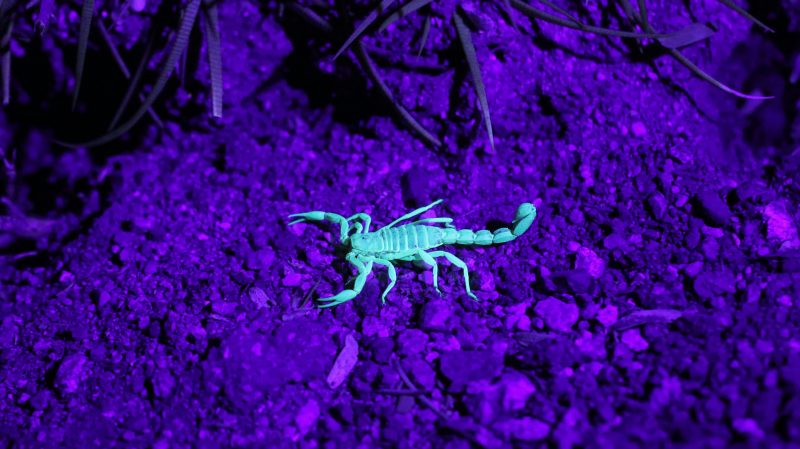
Scott Douglas Jacobsen and Rick Rosner probe the smallest meaningful time: the Planck scale, below which structure and causality fail. Rosner notes uncertainty’s tradeoffs and wonders if extreme densities, like near black holes, alter effective scales. They recap Alien: Earth episode four: an eye-parasite subjugates “Victoria,” a sheep rendered via live, animatronic, and CGI doubles; gamma spikes imply agency amid five alien types and synth children. Shifting to policy, they discuss CDC turmoil, RFK Jr.’s anti-vax influence, and gun saturation. Safety tech like biometrics is ignored; deaths persist. Long term, Rosner imagines “downloadable brains” as protection when politics blocks progress.
Ask A Genius 1506: Beyond Desire: Tech Intimacy, Gen Z, and the Future of Sex

Scott Douglas Jacobsen and Rick Rosner examine sex’s shrinking cultural centrality as Gen Z drinks less, dates less, and grows more intimate with technology. Rosner criticizes Altered Carbon’s hypersexualized futurism and expects tech to keep reducing sex’s social prominence, despite its unmatched, safe pleasure. They contrast generational behaviors, noting Boomers’ elevated STIs. Rosner recounts shifts since the Pill, the backlash after AIDS, and reassessments of coercion. They discuss Alien: Earth’s synth child Wendy, corporate hubris, and evolving identity, and xenomorph biology and design, linking H. R. Giger’s sexual aesthetics to 1970s unease. Comparisons span Severance, Fargo, and Peacemaker’s John Cena.

Ask A Genius 1505: Strong-Jaw Stars, Bar Fights, and Alien: Earth’s Giger DNA

Rick Rosner riffs on screen “great-man” jawlines, wondering if the actress is Sydney Chandler, and cites tall, strong-faced performers like Katey Sagal, Sigourney Weaver, and Geena Davis. He recalls chewing gum as a mouthguard while working bars, sporadic real fights versus triumphant fight dreams, and a 1998–99 sucker punch that cost him $959 and his job. Pivoting to Alien: Earth, he notes the heroine’s synthetic brain with wireless telemetry and a multi-species arc. He contextualizes xenomorph sexuality—facehuggers, cocooning, Alien: Resurrection’s hybrid—via H. R. Giger’s biomechanical aesthetic. He contrasts the sensual 1970s with today’s AI mash-ups, where filters mute tropes and echoes.

Ask A Genius 1504: Testing Informational Cosmology: Super-Old Objects, Heavy Elements, and Future Telescopes

Scott Douglas Jacobsen presses for testability in informational cosmology. Rick Rosner argues near-term tests must target present-day signs of matter older than the universe’s apparent 13.8 billion-year age, despite observability limits: dim, delocalized halo objects and small lensing. He expects space based mega telescopes and AI analytics to reveal super old objects and excess heavy element abundances versus Big Bang predictions, plus more convoluted structure near T~0 from repeated burn collapse cycles. For clarity and precision, he proposes a Gamow-style narrative. Elements beyond uranium are unstable; metallicity rises with time; long lived isotopic ratios date stars and cosmic dating.

Ask A Genius 1503: Entropy, Texas Gerrymandering, and a Potential Show Hiatus

Rick Rosner reacts to Jacobsen’s prompt on entropy, admitting limited study and framing entropy as dwindling exploitable differences and mixed information, with quantum nonlocality complicating “information for whom.” He doubts universal entropy trends beyond local systems. The pair pivot to U.S. politics: a Texas redistricting push favoring Republicans; alleged intelligence-community purges under Trump allies; and the FBI’s search of John Bolton’s papers. Rosner decries misinformation dynamics on his show, says JD and Lance tag-teamed him, and contemplates ending or rebooting with far less politics. He closes with concern about eroding accountability, citing ignored court orders and what he sees as autocracy.

Ask A Genius 1501: Rick Rosner on Falsifiability and Predictions in Informational Cosmology

Rick Rosner frames falsifiability as the ability to find evidence that definitively disproves a theory. For his Informational Cosmology, two key falsifiers would be proving no objects older than 13.8 billion years exist, or confirming dark matter is exotic particles rather than stellar remnants. He predicts: (1) the structure of consciousness mirrors universal physics, (2) objects older than the Big Bang exist, and (3) black holes never collapse to singularities. Possible tests include unusual gravitational lensing, gravitational wave patterns from halo collisions, or variations in constants. He concedes Informational Cosmology currently lacks parsimony but aims to eventually unify constants and structure.

Ask A Genius 1500: Information Pressure, Unsung Physics Heroes, and Nobel Prize Politics

Rick Rosner explains his idea of “everything eats its tail” as matter under extreme pressure becoming degenerate, then differentiating into new states—essentially a universe as an information processor. Time itself emerges from this unfolding differentiation. He compares the incompleteness of his own ideas to George Gamow, who conceptualized the Big Bang before all the math was worked out. Asked about unsung physics heroes, Rosner points to Rosalind Franklin, whose crystallography enabled Crick and Watson’s DNA breakthrough but who died before Nobel recognition. He critiques the Nobel system as topical, political, and inconsistent, likening it to basketball MVP awards or Obama’s premature Peace Prize.

Ask A Genius 1499: Quantum Mechanics, Black Holes, and the Beauty of Physics

Rick Rosner highlights quantum mechanics as the most “neat” physics discovery, still awe-inspiring a century later. He explains the double-slit experiment, where photons interfere with themselves, revealing how reality behaves under uncertainty. This shows physics as the mathematics of incomplete information, defying classical assumptions. Beyond quantum theory, Rosner speculates that the scale of space itself changes inside supermassive black holes, potentially preventing singularities. He suggests that advanced civilizations might exploit these conditions, where constants like the speed of light could shift. For Rosner, both quantum experiments and cosmic extremes demonstrate how information may fundamentally define the universe.

Ask A Genius 1498: Noah Hawley’s “Alien” Series Brings Fresh Horror and Dread

Rick Rosner reviews Noah Hawley’s The New Alien Earth, calling it the most competent entry in the franchise since the first two classics. Set in 2120, Earth is ruled by megacorporations, including one led by Boy Cavalier, a shoeless boy genius who creates “Lost Boys”—children’s minds in synthetic adult bodies. As they battle new alien forms, including a turbo leech and a tentacled eyeball parasite, Hawley balances horror with restraint, often showing aftermath rather than gratuitous gore. Rosner praises Hawley’s inventive storytelling, comparing it to his reinvention of Fargo, and highlighting Timothy Olyphant’s role as a synthetic voice of reason.