Ask A Genius 1529: Is “Alien: Earth”’s Wendy a Mary Sue?

Rick Rosner critiques Alien: Earth through the lens of classic science fiction tropes. He sees Wendy, the hybrid lead portrayed by Sydney Chandler, as fitting the “Mary Sue” archetype: overly competent, with few visible flaws, much like Ripley in Alien (1979) but with heightened powers. He contrasts this with films like The Long Kiss Goodnight, which justify character abilities within the story. Rosner also highlights the “idiot ball” trope—characters making foolish choices to advance the plot—common in Alien films. His larger point: science fiction demands knowledge of its tropes to avoid lazy storytelling, as with time travel clichés.


Ask A Genius 1527: Alien: Earth Escapes, Gym Injuries, and Comedy Breakdowns

Scott Douglas Jacobsen and Rick Rosner explore the bizarre and the brutal. The Alien: Earth saga continues as the Hermit briefly captures a creature, Wendy battles a robotic lieutenant, and their uneasy alliance begins to crack. Rosner then recounts horrific gym injuries, including a powerlifter tearing both quadriceps and common bicep ruptures. He also shares his stepfather’s sternum-removal surgery after thyroid cancer. Shifting to comedy, Rosner recalls Michael Richards’ infamous meltdowns and his own near-breakdown, contrasting explosive outbursts with quieter creative collapses. The conversation ties together fragile humans, resilient machines, and the strange ways both succeed and fail.

Ask A Genius 1524: Jimmy Kimmel’s Return Monologue, Late Night TV History, and Alien Earth Recap

Scott Douglas Jacobsen interviews Rick Rosner on Jimmy Kimmel’s unusually long, sincere return monologue: conciliatory, not apologetic, and unlikely to sway entrenched audiences as legacy TV ratings slide. Rosner situates late night from Steve Allen to Carson to Kimmel and Stewart, noting faster modern news inputs. He then recaps Alien: Earth’s penultimate chaos: synths captured, Prodigy overwhelmed, and Boy Cavalier’s arrogant eye-midge gambit amid Weyland-Yutani’s assault, forecasting multi-season survival math. Touching mortality, they lament Robert Jarvik’s death and reflect on Parkinson’s familial risk, treatment horizons, and resilience. Through it all: speech, satire, and the First Amendment’s enduring guardrails still matter.

Ask A Genius 1523: Alien Earth, Craftsman Violence, and the Perils of Perfection

Scott Douglas Jacobsen asks for an update; Rick Rosner toggles from an OCD-shirt gym chat and a teen’s hair-tic echoing an Emmy winner to Alien: Earth’s mid-episode beats: Wendy/Marcy protests Nibs’s memory wipe, Hermit consults a fired scientist, and an insect-fed death nears discovery in real time. Rosner thinks machine-eating insects signal attrition without erasing the core cast. He rates the series 8–8.5 and contrasts spectacle with craft: Elmore Leonard’s inevitable, unsensational collisions versus Fast & Furious physics. Regretting not greeting Elmore Leonard (and passing on Harlan Ellison), he skewers clichés, praises fairer game-show mechanics, and warns perfectionism smothers output.

Ask A Genius 1508: Alien Earth’s Eye Midge and the AI Gap in Sci-Fi

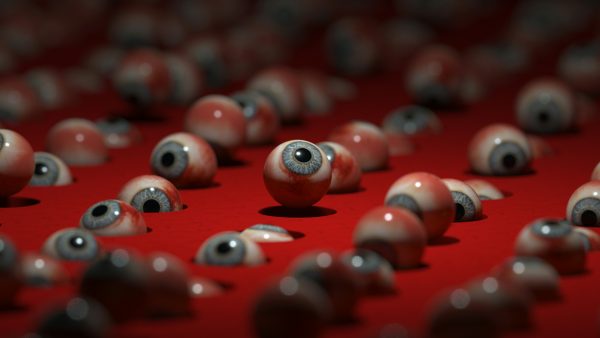
Scott Douglas Jacobsen and Rick Rosner dissect Alien Earth’s “Eye Midge” (Tryptomaniacus ocellus), a plausible parasitic controller that hijacks a sheep’s eye and brain—perhaps echoing memories from a prior human host. They note a shared ecosystem with the eyeless Xenomorph, where acid-blooded “blood bugs,” parasitism, and other traits explain apex evolution. Unseen species like the Orchid/Plumbacar and a flier may broaden the biology. They argue classic sci-fi underestimates ubiquitous AI; Alien’s retro aesthetic limits networked intelligence. Compared with smartphones outrunning Trek’s tricorders, near-future authors (Stephenson, Doctorow, Stross) struggle as reality sprints ahead. Mountainhead’s AI-amplified chaos feels dated; 2040 demands extrapolation.

Ask A Genius 1507: Planck Time, Alien: Earth, and the Politics of Risk

Scott Douglas Jacobsen and Rick Rosner probe the smallest meaningful time: the Planck scale, below which structure and causality fail. Rosner notes uncertainty’s tradeoffs and wonders if extreme densities, like near black holes, alter effective scales. They recap Alien: Earth episode four: an eye-parasite subjugates “Victoria,” a sheep rendered via live, animatronic, and CGI doubles; gamma spikes imply agency amid five alien types and synth children. Shifting to policy, they discuss CDC turmoil, RFK Jr.’s anti-vax influence, and gun saturation. Safety tech like biometrics is ignored; deaths persist. Long term, Rosner imagines “downloadable brains” as protection when politics blocks progress.