Rick Rosner: Since we started talking, the diamond business has been entirely disrupted. You could make quarter-carat or half-carat diamonds in pressure chambers, which was when we first discussed this. But now, new technology lets you create flawless diamonds of arbitrary size for almost no money. There’s even an alphabetic scale for the colour of diamonds, with D being the best, then continuing through H, J, L, M, etc.
If you’re buying a nice stone for a wedding ring—say, Carol’s wedding ring, which was originally my mom’s, and she kept it after her divorce—it might be a G or H colour, which is close to colourless. While D is ideal for colour and flawless clarity, colour is just one aspect. Then there are inclusions—specks inside the stone. A D-grade, colourless, flawless, one-carat mined diamond used to cost at least $10,000 to $15,000 until a couple of years ago. Now they can grow those diamonds—I’ve seen them grow.
You’ll find many misleading claims if you check eBay for prices on stones from India. They might advertise a one-carat, flawless, colourless diamond for $30,000 but then send you a stone made of something else entirely—moissanite, another mineral with a high index of refraction and sparkle. If you shop carefully, you could probably find someone selling a lab-grown diamond chemically and spectrographically indistinguishable from a natural diamond for less than a hundred dollars. It turns out that, apparently, only people my age care about whether a diamond is lab-grown or natural.
Younger people—especially younger women—don’t want their fiancés wasting money on expensive natural diamonds. A rule (promoted by De Beers, the diamond monopoly) used to be that you should spend two to three months’ salary on your engagement diamond, which is utterly ridiculous. But people bought into that idea.
Millennials and younger generations say, “No, don’t waste your money on that.” They’re opting for lab-grown diamonds at about 10% of the price of expensive natural ones. This shift is essentially destroying De Beers. Maybe De Beers deserves to be wrecked a little—they haven’t been the nicest company. They were involved with figures like Cecil Rhodes. They had ties to racist, white supremacist governments in and around South Africa. Perhaps they should face some consequences, but the monopoly is gone now. Diamonds have been overhyped for decades—maybe forever—especially compared to other precious gems like rubies, sapphires, and emeralds. Diamonds aren’t that rare.
Only because of De Beers’ monopoly and highly effective advertising did diamonds maintain such high prices for a century. The idea of a diamond engagement ring comes from De Beers—the slogan “A Diamond Is Forever.” Products like diamond tennis bracelets were created to address a glut of small stones. They managed to market these products in a way that made diamonds seem rare, even though you can now grow them. They’re pretty screwed. Rotten Tomatoes.
If you go 1.2 carats, people might still think, “Oh, it’s natural, and you went all out.” It’s a weird upside-down market.
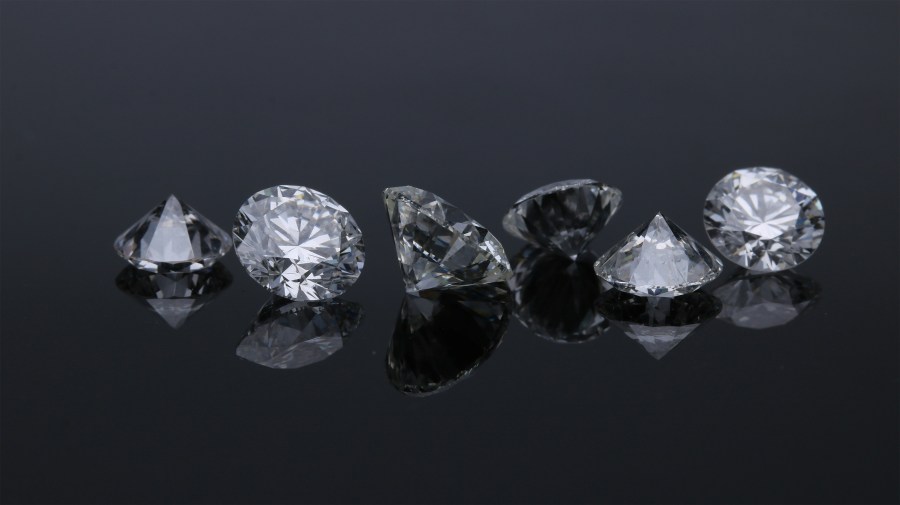
Photo by Edgar Soto on Unsplash
Rick Rosner is an accomplished television writer with credits on shows like Jimmy Kimmel Live!, Crank Yankers, and The Man Show. Over his career, he has earned multiple Writers Guild Award nominations—winning one—and an Emmy nomination. Rosner holds a broad academic background, graduating with the equivalent of eight majors. Based in Los Angeles, he continues to write and develop ideas while spending time with his wife, daughter, and two dogs.
Scott Douglas Jacobsen is the publisher of In-Sight Publishing (ISBN: 978-1-0692343) and Editor-in-Chief of In-Sight: Interviews (ISSN: 2369-6885). He writes for The Good Men Project, The Humanist, International Policy Digest (ISSN: 2332-9416), Basic Income Earth Network (UK Registered Charity 1177066), A Free Inquiry, and other media. He is a member in good standing of numerous media organizations.
License & Copyright
In-Sight Publishing by Scott Douglas Jacobsen is licensed under a Creative Commons Attribution-NonCommercial-NoDerivatives 4.0 International License. ©Scott Douglas Jacobsen and In-Sight Publishing 2012-Present. Unauthorized use or duplication of material without express permission from Scott Douglas Jacobsen strictly prohibited, excerpts and links must use full credit to Scott Douglas Jacobsen and In-Sight Publishing with direction to the original content.

