How do daily air raids in Ukraine and escalating U.S.–Iran tensions reveal the changing technology and geopolitics of modern warfare?
In this conversation, Scott Douglas Jacobsen and Rick Rosner examine the lived experience of war in Ukraine and the evolving global strategic landscape. Jacobsen recounts frequent drone and missile attacks in Kyiv, explaining how Shahed drones and air-defence systems shape everyday life under bombardment. Rosner explores the broader implications of drone warfare, U.S. strikes on Iran, and the uncertain prospects for regime change. Their discussion extends to international law, energy markets, and the economics of modern conflict. The interview blends frontline observation with geopolitical analysis, revealing how technological change, political rhetoric, and civilian resilience intersect in contemporary warfare.
Scott Douglas Jacobsen: Since arriving in Lviv and later Kyiv, I have experienced frequent air-raid alerts and attacks throughout the day and night. At times they occur in clusters—morning, afternoon, and overnight—creating the sense that the bombardment can happen at almost any hour. They are definitely happening more frequently for the third trip compared to the second trip and certainly from the second trip compared to the first trip.
Rick Rosner: Is it drones or missiles or both?
Jacobsen: Both. The slower-moving attacks are when you hear the anti-air defences close—really close. The Shahed drones are distinctive. On my first day in Kyiv, I was sleeping and heard a hovering above us. The closest comparison for a North American reference would be a lawnmower in the sky. They are loud—very loud. Ukraine’s Defence Intelligence has said Russia aimed to produce around 30,000 Shahed-type UAVs in 2025.
Rosner: How big are the drones? Six feet across?
Jacobsen: A Shahed-136 is about 3.5 metres long with a wingspan around 2.5 metres—roughly eight feet—so six feet across would be an underestimate. The systems used to take them down can be much smaller. It is a rapidly advancing technological environment.
Rosner: So it is drone versus drone in the sky?
Jacobsen: In some cases, yes. The technology is becoming more sophisticated, and the techniques for using it are improving. The operators and their teams are becoming more skilled. Remember, this is largely a citizen army—painters, bakers, dog walkers, cashiers, carpenters—now on the front line.
Rosner: It still functions through a military hierarchy, though, right?
Jacobsen: Yes, it is organized by rank. Ukraine is still in a rapid transition because it did not have a large modern army before 2014.
Rosner: Do people remain optimistic?
Jacobsen: People remain realistic and focused on getting through the day. If the air-raid alarms go off, international franchises and other businesses shut down until the alarms end, then reopen. A McDonald’s or KFC will close temporarily.
Rosner: We are speaking on March 2nd. Winter will be over in a few weeks. Does that mean more ground action?
Jacobsen: Temperatures are around minus five, minus six, plus one, minus two. For me, as a Canadian from a small town who worked on a horse farm, that is manageable—wear an extra layer. When it was minus 19, minus 15, minus 20, that was punishing after five or ten minutes. People endure.
If you get sick or have an infirmity, things become stark because you have to remain in place and recover while air-raid alarms sound or explosions occur in the background.
Rosner: If someone needs medical services—an MRI or CT scan—can they still get them?
Jacobsen: There are still places where you can get them, though with longer waits. A dentist appointment might be quicker because fewer people are going. At the same time, many medical professionals likely move to the front line during wartime, along with medically trained volunteers.
Organizations that track attacks on humanitarian and medical institutions report systematic bombing of medical sites. Russia appears willing to act with extreme cruelty, possibly as a psychological operation to demonstrate that nothing is off limits.
On journalist deaths, the numbers require clarification. The Committee to Protect Journalists (CPJ) reported that 129 journalists and media workers were killed worldwide in 2024, making it one of the deadliest years on record for the press. A majority of those deaths were linked to the Israel–Gaza war. Other countries with journalist fatalities included Sudan, Mexico, and Ukraine.
According to CPJ, at least twenty-one journalists and media workers have been killed while working in Ukraine since Russia’s full-scale invasion began in February 2022. Many additional journalists have faced detention, harassment, injury, surveillance, and other threats while reporting from the conflict zone.
These risks are closely tied to the nature of the war itself. Ukraine is an active battlefield subject to missile, drone, and artillery attacks across civilian areas, and journalists frequently work in the same locations where those strikes occur. As a result, reporters face many of the same dangers as civilians and soldiers, even when they are not embedded with military units or directly covering frontline operations.
Rosner: Should we talk about our war now? The United States’ new war?
Jacobsen: Yes, let’s discuss that. I will add one point regarding Israel. Several major international organizations—such as Human Rights Watch, Amnesty International, the UN Office of the High Commissioner for Human Rights, and other independent monitors—have argued that Israel may have committed acts that could amount to genocide or other serious international crimes in Gaza. Others argue that the actions fall short of genocide under international law but may constitute war crimes or crimes against humanity. These debates remain ongoing. I’ve had Israeli lawyer colleagues argue it’s not genocide, while this is not a context for international law in these areas. Which, unfortunately, is duplicitous, the argument from human rights and international law when necessary to decline genocide and other criminal allegations, while arguing international law doesn’t matter in these areas. It’s not a la carte; it’s a highly educated and reasonably intelligent person’s denial of state crimes in which they happen to have citizenship. Same denialist process, though, along a spectrum.
A common rebuttal raised in public discussion is that Gaza’s population has increased over time, so the situation cannot constitute genocide. The counterargument from legal scholars is that genocide is defined not by population totals but by intent and specific prohibited acts directed toward the destruction of a group, in whole or in part. Determining that threshold ultimately requires adjudication in international courts.
The scale of the violence remains significant regardless of legal classification. Tens of thousands of Palestinians in Gaza have been killed during the war, with a large proportion of the population being children because more than half of Gaza’s residents are under eighteen. Civilian vulnerability in such a demographic structure increases the likelihood that children will be among the casualties, whether intentionally targeted or killed during broader military operations.
However, it is important to note that the highest legal standard for declaring genocide has not yet been reached. That determination would require formal rulings by international courts such as the International Court of Justice or the International Criminal Court. In November 2024, the International Criminal Court issued arrest warrants for Israeli Prime Minister Benjamin Netanyahu and former Defense Minister Yoav Gallant over alleged war crimes and crimes against humanity related to the Gaza conflict. These charges remain subject to ongoing legal proceedings.
Rosner: Now, turning to the United States and Iran. There have been reports of U.S. strikes targeting Iranian officials and military leadership. Even if high-ranking figures are killed, that alone does not cause a regime to collapse.
Iran is geographically large—roughly four times the size of Texas—and has a population of about ninety million people. Its military structure includes hundreds of thousands of active personnel, large reserve forces, and the Islamic Revolutionary Guard Corps, which functions both as a military and internal security force. Altogether, more than a million individuals could potentially be mobilized.
Removing individual leaders, therefore, does not necessarily destabilize the regime. Historically, regime change has typically required large-scale internal collapse or a full-scale ground invasion, both of which would be extremely costly and complex.
At the same time, many Iranians—especially those who have suffered under the regime—harbour deep resentment toward senior leaders who have overseen decades of repression. Some people, therefore, see the removal of such figures as a form of justice, even if the regime itself remains intact.
Public rhetoric surrounding these developments has also become unusually crude. Some officials have used language drawn from internet subcultures—for example, phrases like “lethality maximization,” echoing slang from online “looksmaxing” communities. The adoption of such terminology by military institutions reflects a striking shift in political communication, where informal internet language increasingly enters official discourse.
The tone of the rhetoric has been crude. Pete Hegseth speaks like a television pundit—unsurprising given his background at Fox News. The messaging has been contradictory. On one hand, officials say the objective is not regime change. On the other hand, there is chest-thumping language suggesting that eliminating senior figures effectively amounts to changing the regime. The objectives remain unclear.
President Trump has also avoided giving precise answers about the duration or the campaign’s strategic goals. Trump will turn eighty in less than fifteen weeks, and his public statements have been inconsistent. At different points, he has suggested the bombing could continue for two weeks, four weeks, or five weeks. There is little clarity about what the administration is trying to accomplish.
Prediction markets such as Polymarket have estimated a roughly 60% chance that the Iranian regime will survive the current U.S. military action. That probability may underestimate the regime’s durability.
So far, according to available reports, several Americans have been killed in connection with the conflict.
Historically, the killing of four Americans during the 2012 attack on U.S. diplomatic facilities in Benghazi, Libya, became a major political controversy in the United States and was heavily emphasized by Republican politicians for years afterward. It remains to be seen whether Democrats will raise comparable political pressure over American casualties in the current situation, especially since they are currently out of executive power.
The military action itself is unlikely to produce permanent changes to Iran’s government structure. What it will almost certainly produce is turbulence in global energy markets.
If Iran restricts or threatens shipping through the Strait of Hormuz, the impact could be significant. Roughly twenty percent of the world’s oil supply passes through that narrow waterway between Iran and Oman. Any disruption there typically drives oil and gasoline prices upward across global markets.
Jacobsen: At the same time, the long-term price trajectory of renewable energy has been steadily declining. Over the past two decades, the cost per watt of solar and wind power has fallen dramatically, while installations have increased year after year. China, in particular, has dramatically expanded solar capacity in recent years.
As a result, the share of oil and gas in the global energy supply has been gradually declining. The transition away from fossil fuels is already underway, and geopolitical disruptions in oil supply may actually accelerate the shift toward renewables.
Rosner: Are you suggesting that the long-term decline in oil’s dominance is partly driven by falling demand relative to other energy sources?
Jacobsen: The energy demand overall is still increasing. What is changing is the cost structure. Renewable energy has become significantly cheaper per unit of electricity in many regions, and its deployment continues to grow rapidly. If oil prices spike due to instability in the Strait of Hormuz, it could further incentivize the transition to alternative energy sources.
Rosner: There is also significant political chaos surrounding the campaign. The central strategic problem remains the same: limited airstrikes or leadership decapitation operations are unlikely to change the form of government in Iran. Without large-scale internal upheaval or a full ground invasion—which would be enormously costly—the regime is likely to remain in power.
One could argue that even if the form of government in Iran does not change, degrading the regime’s capabilities may still serve strategic goals. Strikes can deplete military stockpiles, slow nuclear development, and potentially deter further escalation. However, the lack of clarity in U.S. objectives is characteristic of Trump’s leadership style. The administration has not articulated a consistent strategic endpoint.
There has also been some incidental absurdity in the campaign’s messaging. The operation has reportedly been named Epic Fury. Military operations have long had dramatic titles—Operation Enduring Freedom, for example—but this one appears particularly simplistic, seemingly crafted to resonate with Trump’s political base. Critics have also pointed out that the word “Epic” shares the same initial letters as “Epstein,” leading some online commentators to refer to the campaign as “Operation Epstein Fury” mockingly.
The most technically significant development connected to these strikes has been the reverse engineering of Iranian Shahed drone technology. Western and allied engineers have studied captured systems, refined their design, and produced more efficient versions. These new unmanned aerial systems can be deployed at far lower cost than traditional cruise missiles.
One example often discussed is the U.S. military’s use of low-cost loitering munitions built on similar design principles. These drones can cost tens of thousands of dollars rather than millions. By comparison, a Tomahawk cruise missile costs roughly two million U.S. dollars. If a loitering munition costs around $30,000 to $35,000, dozens can be produced for the price of a single cruise missile.
This cost asymmetry changes the economics of warfare. Large numbers of inexpensive unmanned systems can overwhelm defences in ways that traditional high-cost precision weapons cannot. If conflicts increasingly rely on swarms of unmanned aerial systems, it could reshape how the United States and other militaries conduct prolonged campaigns.
The United States has claimed that hundreds or even thousands of sites linked to Iranian military infrastructure have been struck during the operation. Civilian casualties have also been reported. In one widely discussed incident, a girls’ school was hit in a strike near a suspected Revolutionary Guard facility, reportedly killing around 150 students. The exact cause remains uncertain—possibilities include a misdirected drone or missile, or a malfunction involving Iranian defensive fire.
Regardless of the precise cause, such incidents highlight the profound risks of conducting military operations in densely populated areas. When targets are located near civilian infrastructure such as schools, hospitals, or residential neighbourhoods, the likelihood of catastrophic civilian harm rises dramatically.
The conflict has also spilled beyond Iran’s borders. Iran has reportedly launched retaliatory missile and drone strikes toward multiple countries in the Gulf region. These attacks have been described as large-scale and unpredictable, targeting locations across several neighbouring states. Such escalation increases the risk that a regional confrontation could broaden into a much larger conflict involving multiple governments across the Middle East.
Iran also attempted to launch missiles across the Mediterranean toward Cyprus, though several reportedly fell into the sea before reaching their targets. Analysts noted that the countries targeted in Iran’s retaliatory strikes all host U.S. military bases. Given the range and reliability limits of Iran’s missile systems, it makes strategic sense that most of its strikes would focus on nearby regional targets where its capabilities are strongest.
Another point worth noting is public opinion in the United States. A Reuters–Ipsos poll reported that roughly 27 percent of Americans approved of the strikes on Iran, while about 43 percent disapproved, and a large portion of respondents either had no opinion or were unsure. Without the exact sample size and margin of error, those numbers should be interpreted cautiously, but they broadly reflect a familiar pattern in American politics.
There is a core portion of the electorate—roughly a quarter of U.S. adults—who consistently support Trump’s actions. Another segment may lean toward supporting him depending on circumstances. Others are skeptical but remain in a wait-and-see posture, watching to see whether the policy produces results.
I fall mostly in the disapproval camp, though with some ambivalence. Occasionally, a controversial decision produces an outcome that turns out better than expected. For example, I was not particularly opposed when Trump previously authorized strikes targeting aspects of Iran’s nuclear program, which were framed as efforts to disrupt weapons-related development. This current campaign, however, raises more concerns.
Jacobsen: What is your assessment?
Rosner: One major issue is legality. Under the U.S. Constitution, initiating sustained military action typically requires congressional authorization, unless it falls within very limited defensive circumstances. Without such authorization, critics argue that the strikes could violate domestic law.
From the perspective of international law, unilateral military action against another sovereign state without a clear self-defence justification or a United Nations mandate is also widely considered a violation of international legal norms.
At the same time, there is genuine sentiment among some Iranians—both within the country and in the diaspora—who hope for the end of the Islamic Republic, which they see as a theocratic and authoritarian regime that has been in power since 1979. Many critics of the government argue that it enforces a restrictive interpretation of Islam and suppresses political freedoms.
That said, the regime has been in place for roughly forty-six years. Governments that appear entrenched often remain stable for long periods. Yet history shows that systems that seem immovable—the Soviet Union or Nazi Germany, for instance—can collapse suddenly once conditions change.
There is always a possibility of regime collapse, but the probability appears limited under current conditions. During the protests a month ago, one analyst suggested the regime might fall soon; at the time, I estimated roughly a thirty-five percent chance. Given the present situation, I would assign a lower probability.
How are Ukrainians reacting to these developments, especially considering the technologies used against them during Russia’s invasion?
Jacobsen: Ukrainian leaders, including President Volodymyr Zelensky, have been clear about the geopolitical implications. Russia has historically presented itself as an ally of Iran, yet it has not consistently intervened to protect allied governments when crises emerge.
Rosner: Russia did not decisively defend Syria’s leadership during its most unstable moments, and similar limits appear in other contexts as well.
That raises a broader question about the practical value of Russian alliance commitments. When events reach a critical point, the support promised by Moscow may not translate into decisive action.
Looking at another example, Afghanistan illustrates how quickly political systems can shift despite long-standing military realities. According to widely cited estimates, the Taliban maintain tens of thousands of fighters today. Military strength alone does not always determine political outcomes; legitimacy, public sentiment, and institutional collapse can matter just as much.
Afghanistan is a useful comparison. The United States spent about twenty years there and roughly $2.3 trillion over the course of the war. Iran is a far larger and more capable country. It has many times the number of military personnel, including the regular army, naval forces, and the Revolutionary Guard. If a conflict with Iran were to continue for any significant period, it could become extremely expensive.
There have already been costly incidents. For example, several U.S. fighter aircraft have reportedly been lost due to friendly fire or operational accidents in past conflicts, and modern combat aircraft can cost tens or even hundreds of millions of dollars each, depending on the model. If operations continued for a month or two at high intensity, the overall cost of the campaign could easily reach tens of billions of dollars and climb much higher.
Jacobsen: That is enough on that topic.
Rosner: I have another subject. I have been experimenting with a personal fitness routine. I keep exercise equipment in the house—a weight machine in the attic, abdominal equipment, and resistance bands on the main floor. Because the equipment is always available, I have been trying an unusual approach: performing a couple of short sets of exercises every waking hour.
The idea is simple. If moderate weight training is beneficial, spreading small amounts of exercise throughout the day could be even better. I have no clear evidence that this approach works, but it has produced one noticeable effect: it leaves me physically exhausted.
The constant exercise increases overall fatigue. That makes sense physiologically—muscles and the nervous system need recovery time, and repeatedly engaging them throughout the day may lead to fatigue. Are you heading to sleep?
Jacobsen: There is a strange detail about the air-raid alarm system. The mobile alert app used in Ukraine includes an English-language alert voiced by Mark Hamill, the actor who originally played Luke Skywalker. When the alert activates, his voice announces the warning in English.
After the alert ends—usually thirty minutes to an hour later—the message concludes with a line reminiscent of Star Wars: “May the Force be with you.” It is a form of dark humour during wartime.
When the alarm sounds, you immediately feel fear. You might be watching something online or working when the alert goes off, and suddenly, you are brought back to the reality of the war.
Rosner: Hamill is known for publicly supporting Ukraine, so it is not surprising that he agreed to record those alerts. One more question. Do people reinforce their beds or sleeping areas?
Jacobsen: Some people try, but reinforcing a bed or bedroom does not provide meaningful protection. In blast safety, the general advice is to stay at least two interior walls away from windows or the outside. That reduces exposure to blast pressure and shrapnel.
Some individuals attempt to build improvised protective structures—such as steel frames or reinforced sleeping spaces—but these would not protect against a direct strike. If something like a missile or drone hits directly, the outcome would be catastrophic regardless of improvised protection.
Rosner: Stay safe.
Jacobsen: I will politely ask the Shahed drones.
Rosner: Talk tomorrow.
Jacobsen: See you tomorrow.
Rick Rosner is an accomplished television writer with credits on shows like Jimmy Kimmel Live!, Crank Yankers, and The Man Show. Over his career, he has earned multiple Writers Guild Award nominations—winning one—and an Emmy nomination. Rosner holds a broad academic background, graduating with the equivalent of eight majors. Based in Los Angeles, he continues to write and develop ideas while spending time with his wife, daughter, and two dogs.
Scott Douglas Jacobsen is a Writer-Editor for www.rickrosner.org with more than 2,000 collaborative short-form and long-form interviews with Rick Rosner. He is the Founder and Publisher of In-Sight Publishing (ISBN: 978-1-0692343; 978-1-0673505) and Editor-in-Chief of In-Sight: Interviews (ISSN: 2369-6885). He writes for International Policy Digest (ISSN: 2332–9416), The Humanist (Print: ISSN, 0018-7399; Online: ISSN, 2163-3576), Basic Income Earth Network (UK Registered Charity 1177066), Humanist Perspectives (ISSN: 1719-6337), A Further Inquiry (SubStack), Vocal, Medium, The Good Men Project, The New Enlightenment Project, The Washington Outsider, rabble.ca, and other media. His bibliography index can be found via the Jacobsen Bank at In-Sight Publishing. He has served in national and international leadership roles within humanist and media organizations, held several academic fellowships, and currently serves on several boards. He is a member in good standing in numerous media organizations, including the Canadian Association of Journalists, PEN Canada (CRA: 88916 2541 RR0001), and Reporters Without Borders (SIREN: 343 684 221/SIRET: 343 684 221 00041/EIN: 20-0708028), and others.
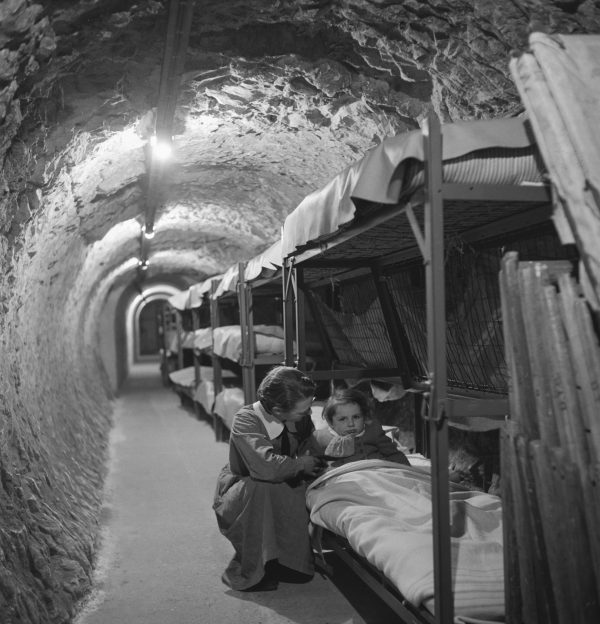
Photo by Library of Congress on Unsplash
Last updated May 3, 2025. These terms govern all In Sight Publishing content—past, present, and future—and supersede any prior notices. In Sight Publishing by Scott Douglas Jacobsen is licensed under a Creative Commons BY‑NC‑ND 4.0; © In Sight Publishing by Scott Douglas Jacobsen 2012–Present. All trademarks, performances, databases & branding are owned by their rights holders; no use without permission. Unauthorized copying, modification, framing or public communication is prohibited. External links are not endorsed. Cookies & tracking require consent, and data processing complies with PIPEDA & GDPR; no data from children < 13 (COPPA). Content meets WCAG 2.1 AA under the Accessible Canada Act & is preserved in open archival formats with backups. Excerpts & links require full credit & hyperlink; limited quoting under fair-dealing & fair-use. All content is informational; no liability for errors or omissions: Feedback welcome, and verified errors corrected promptly. For permissions or DMCA notices, email: scott.jacobsen2025@gmail.com. Site use is governed by BC laws; content is “as‑is,” liability limited, users indemnify us; moral, performers’ & database sui generis rights reserved.
 Rick Rosner